Links
Archives
Monday, October 31, 2005
|
Haze and char once again... ...to put you in the Halloween mood. |
 VICE It’s a small academic publishing house, so nobody much cares, but the University of Georgia Press has really been fucking up lately. First there was the revelation of the cozy corruption of its poetry contests, in which cronies routinely awarded cronies. Now there’s its fiction contest, which this year crowned a winner who plagiarized one of his stories: U. of GA Press Recalls Short Stories, Revokes Prize Via Inside Higher Ed. |
|
UD SALUTES… …the students of the University of Wyoming. Disgusted by the state’s clear intention to continue prostituting itself to diploma mills, Wyoming’s student senate has decided it’s time for adults to step in: The University of Wyoming Student Senate plans to lobby lawmakers to crack down on unaccredited private colleges in the state, saying those schools drag down the reputations of other Wyoming institutions. |
|
UD feels distinctly… …o’er-laden with Ladner lately, but let’s try to keep up anyway. There’s increasing unhappiness with his golden or platinum or whatever parachute, not merely on the part of American University students and faculty, but now on the part of Senator Grassley and the Washington Post. Here’s the Post this morning: At the very least, the extra $950,000 seems unwise under these unpleasant circumstances. Mr. Ladner certainly made contributions to American University: The endowment grew dramatically, as did the qualifications of the student body. But Mr. Ladner has already been compensated generously for his efforts, and his own actions and sense of entitlement were the primary cause of the current mess. |
|
VERY FRIGHTENING HALLOWEEN POST  The worse things get for George Bush, the better things get for UD’s GW colleague and presidential psychoanalyst, Justin Frank. Frank, a clinical professor of psychiatry, believes that the president is a full-throttle psychotic. His “multiple mental illnesses” date from the death of his younger sister. In books, articles, and a spate of recent interviews, Frank has warned America that it elected a madman, and now, as Bush drunkenly falls off of his bicycle (“Nobody confronts him about falling off of his bicycle. People are too afraid to even ask the question.”) and reveals other signs of trauma- and alcohol-induced dementia, Frank can only say I told you so. Professor Frank has appeared lately in the Larouche Executive Intelligence Review, Mathaba.net, and the National Enquirer to discuss the president‘s psyche. His technique is “applied psychoanalysis,” the deep analysis of a person based on watching them on television and reading news reports about them: In 2002, he became concerned about Bush’s abnormal behavior. Using applied psychoanalysis, a scientific method of studying historical figures and foreign leaders, Dr. Frank reached his conclusions based on massive amounts of public documentation — autobiographical and biographical accounts, public video footage of the President, and statements by Bush’s associates and relatives. This is the first case study of applied psychoanalysis on a sitting president. Although he begins a recent interview by complaining that his book about the president‘s insanity, Bush on the Couch, has “been not well-promoted by my publisher, unfortunately,” Frank is undaunted. Prompted by his interviewer, who notes that in fact “the whole underlying concept of applied psychoanalysis is that public figures offer, in some respects, more clinical material than even individuals who are patients whom you only see under limited circumstances,” Frank reviews the president’s life and concludes that his escalating insanity derives from “the fact that he was never able to mourn, and when you don't mourn, you can't integrate your inner life. What happens is that, as I write in the book, sorrow is the vitamin of growth, and until you face who you are and what you've lost, you really can't organize your mind, and so what happens is when you're the first born, and the next one dies, you're left with a lot of unworked-out hostility, anger, guilt, that maybe your wishes killed them. You have lots of magical thinking, and if you don't have a family that helps you gather those things together, you can be in a lot of trouble.” Pursued by demons, Bush retreats, Frank reports, “to his inner version of Crawford, Texas, just retreat[s] to the Crawford of his mind.” Most recently, in an exclusive interview to the Enquirer, Frank reveals that: "Bush is drinking again. Alcoholics who are not in any program, like the President, have a hard time when stress gets to be great. I think it's a concern that Bush disappears during times of stress. He spends so much time on his ranch. It's very frightening." |
Sunday, October 30, 2005
|
Brownout Just a couple of comments about a couple of lists, one from the Sunday Times of London, and the other from Japan, of the world’s best universities: 1.) What's the deal at Brown? Brown University makes a remarkably poor showing on both lists -#61 on the British list (much lower than the rest of the Ivy League, except for Dartmouth), and #82 on the list from Japan, with the rest of the Ivies, except Dartmouth, similarly situated. (UD has already blogged about Brown’s decline in domestic rankings.) The Brown student newspaper has taken notice of the #61 rank and written about it. 2.) With the exception of Bologna University, staggering in at #186 out of 200, there is no Italian representation on the British list. Rome University is 93rd out of a hundred on the Japanese list. The Italian university system remains a national embarrassment, with violent student protests against any reorganization of higher education raging even as I blog. ---------------- Correction: Kyle points out that I missed La Sapienza, ranked #162. |
Saturday, October 29, 2005
|
The Crackup “Like Heidi, the feminist art historian, Laurie [an English professor] has a revealing crackup while presenting a lecture,” a reviewer writes about Wendy Wasserstein‘s Third, a play UD’s already posted about quite a bit, though she’s neither seen it nor read its script. The-professor-who-has-a-revealing-crackup-while-presenting-a-lecture is a tried and true motif of fiction, drama, and film. Popular culture, of course, already considers professors nutty. 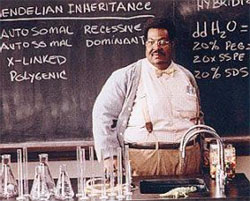  Writers, however, seem intrigued by the painful irony of the culture’s custodians of wisdom going mad… as if to say the world’s so insane that even the most reasoned among us must go round the bend. Here’s UD’s favorite example of this motif, from the opening pages of Saul Bellow’s Herzog: He was clear enough in April, but by the end of May he began to ramble. It became apparent to his students that they would never learn much about The Roots of Romanticism but that they would see and hear odd things. One after another, the academic formalities dropped away. Professor Herzog had the unconscious frankness of a man deeply preoccupied. And toward the end of the term there were long pauses in his lectures. He would stop, muttering “Excuse me,” reaching inside his coat for his pen. The table creaking, he wrote on scraps of paper with a great pressure of eagerness in his hand; he was absorbed; his eyes darkly circled. His white face showed everything - everything. He was reasoning, arguing, he was suffering, he had thought of a brilliant alternative; he was wide-open, he was narrow; his eyes, his mouth made everything silently clear - longing, bigotry, bitter anger. One could see it all. The class waited three minutes, five minutes, utterly silent. |
Friday, October 28, 2005
|
Another note on UD's father-in-law Professor Jerzy Soltan from the Harvard Crimson "...a great, big, lanky Polish bird..." ...Gerald M. McCue, John T. Dunlop Professor of Housing Studies Emeritus at the GSD, first met Soltan around 1970 before joining Harvard in 1976. |
|
Harold Bloom Rings UD's Chimes -- But then I said, ah, the two greatest writers of the twentieth century are James Joyce and Marcel Proust. Joyce is interested in changing the form of the novel in relation to the character, whereas Marcel Proust, the great moralist, is in the great tradition of Descartes and Montaigne... |
|
John Simon on Third (whose NY run has been extended) [This is a] serious comedy about college life. ... [The] English prof is Laurie Jameson, a '60s-style radical. She teaches ``King Lear'' as the tragedy of Goneril and Regan, independent-minded women saddled with a retro father who might as well be a DWEM, and a sister Cordelia, who is, from the feminist standpoint, a dishrag. |
|
NEGATIVE OPTICS From today's Inside Higher Ed : Learning From American U.'s Mistakes |
|
Congress Steps in at AU UD thanks Mr X for keeping her up to date on the Ladner ladeeda. He links to the latest Washington Post story, which notes that: In the days since the agreement on the departure deal, anger on campus has continued to mount. Hundreds of students have sent an e-mail to members of Congress asking for oversight of a board they said engaged in reckless behavior that could cost students and faculty and staff members millions of dollars. Congress seems willing to oblige: The Senate Finance Committee has asked for every document related to ousted American University president Benjamin Ladner's severance package and compensation and for the board's plans for an audit of all 11 years of his tenure. UD has no idea what implications this investigation might have for the severance package. |
Thursday, October 27, 2005
|
UD presented a paper today.. ...in her department, during which she alluded to the high cost of college. If only she’d seen this, she’d have been able to give a local example! NEW YORK (CNN/Money) - Tuition at the most expensive four-year college is up only 2.7 percent from last year. But a small increase on an already big number is still gob-smacking. |
|
HARRIET MIERS’S BLOG!!! is winding down. (via Ann Althouse). Here’s a poem she posted. One of her readers wrote it about her. And it seems to me you lived your nomination |
Wednesday, October 26, 2005
|
BLOGOSCOPY (Josh Earnest?) From today's Christian Science Monitor: Their clout rising, blogs are courted by Washington's elite ...[P]oliticians are eager to co-opt them - or, at least, engage them. Last week, House Republicans convened the first ever "Capitol Hill Blog Row." In a small committee room in the Capitol, a dozen bloggers, selected by an informal poll of GOP staff, were provided soft drinks, a high-speed Net connection, and access to top Republican figures for half a day. Issues discussed ranged from how to cut government spending to the future of the GOP. As a follow-up, Speaker Hastert is launching his own blog. "Blogging is the new talk radio," says Hastert spokesman Ron Bonjean... ..."The number of people who engage in political discussion or get political news from all online sources, including blogs, is skyrocketing and currently numbers over 75 million Americans," write journalists David Kline and Dan Burstein in their new book, "Blog! how the newest media revolution is changing politics, business, and culture." ..."Sometimes there are stories that don't fit with our larger, overall national media strategy that we send out to encourage and motivate and engage people in the blogosphere," says DNC spokesman Josh Earnest. "It's hard to imagine how we could communicate with them so effectively without this new technology," he adds. |
|
As long as the body snatchers don’t look like ATM MAN… WASHINGTON, Oct. 26 /U.S. Newswire/ -- The George Washington University Hospital and its exterior will be visible on the big screen in the upcoming motion picture, "The Visiting." The movie is a remake of 1956's "The Invasion of the Body Snatchers." The updated version stars Nicole Kidman and Daniel Craig, is directed by Oliver Schbiegel and produced by Joel Silver. Carol (Nicole Kidman) plays a Washington psychiatrist who discovers the cause of a mysterious epidemic affecting human behavior and must fight to protect her son who may be the one who holds the key to end the epidemic. Daniel Craig plays Ben, Carol's love interest and colleague. Exterior shots were taken in the courtyard between the hospital and The George Washington University Medical Center and followed the actors walking towards the front entrance of GW Hospital. Interior scenes of the hospital will be replicated at a soundstage from photographs taken of the hospital and its employees. "The Visiting" is scheduled to be released in the United States in late 2006. |
|
Attention Alumni Donors: You’re One in 295 Million to Us! From today’s Yale Daily News : [Ben] Stein's point about his "pitiful little gifts" failing to make an impact on Yale is at first glance […] persuasive. But this argument is akin to the logic used to argue that voting is a waste of time. Admittedly, each individual vote -- and each small contribution to Yale -- has a small impact. But just as democracy would fail if no one voted, Yale could not function as it does today without individual alumni gifts. |
|
Snapshots from Home ATM MAN  Truly creepy and currently plastered all over the Washington Metro. |
|
BREAKING: Rice Played Bach Fugues, Let Others Keep Klan Away!  When she reminisces, she talks of piano lessons and her brief attempt at ballet -- not of Connor setting his dogs loose on brave men, women and children marching for freedom, which is the Birmingham that other residents I met still remember. …When Rice was growing up, her father stood guard at the entrance of her neighborhood with a rifle to keep the Klan's nightriders away. But that was outside the bubble. Inside the bubble, Rice was sitting at the piano in pretty dresses to play Bach fugues. Eugene Robinson Washington Post |
|
Never-ending Story As UD anticipated, the long Ladner nightmare at American University is not over. Most divisions of the university have, like the faculty of the law school, now “voted to condemn the settlement, calling it a waste of university assets and a betrayal of the school's educational mission,” reports this morning’s Washington Post. Students are appalled. A couple of now-ex trustees call the deal by which the university has gotten Ladner to go away a “platinum parachute.” UD thinks AU should take a deep breath, read over the recent history of Boston University’s deal to get rid of Daniel Goldin, and accept the situation. |
Tuesday, October 25, 2005
|
A Second Look at Third Wendy Wasserstein’s new play about academia, Third, gets a negative but sympathetic review in today’s New York Times. (UD mentioned this play earlier, here.) Though I’ve not yet seen it, and given this review probably won’t, the play sounds as though it’s trying to express important ideas about the culture of universities in America today. Like Doris Lessing’s novel, The Golden Notebook, Third seems most interested in the process by which committed people of the left become disillusioned, or realize the limitations of their worldview. The play, writes Ben Brantley, “dares to wonder if liberals now require a few lessons in tolerance… Ms. Wasserstein is politely asking audiences who have grown older with her to acknowledge… the possibility that they might be wrong on subjects they were once sure about.” In particular, Wasserstein goes after the clueless moral strutting of humanities professors. Her main character’s a self-satisfied and superficial woman who announces to her Shakespeare seminar, “Rest assured this classroom is a hegemonic-free zone,” and who says to someone of a shared colleague: “How could you have a problem with Rena? She’s a Guggenheim poet.” Confronted with a conservative male student who writes a strikingly good paper about King Lear for her, the professor wrongly accuses him of plagiarism, since she assumes such a person could never produce sensitive and intelligent literary criticism. (The professor's own written work is gender studies crappacino.) A play like this, though not destined for immortality, ought to be part of the self-examination liberals have lately undertaken, as in the recent, much-discussed paper co-written by Elaine Kamarck and William Galston. |
Monday, October 24, 2005
|
LADNER ACCEPTS From a local tv news site: The saga of American University President Benjamin Ladner has come to an end. UD doesn't think it's quite come to an end. There's still his tell-all book to prepare for. -------------- Update: The Washington Post has greater detail. |
|
Aide-memoire The children’s game, “My Grandmother's Trunk,” a storytelling website explains, goes like this: The first person begins by saying, "In my grandmother's trunk there is an airplane," or any item beginning with the letter "A." The second says, "In my grandmother's trunk there is an airplane and a bottle," and so on until you reach the end of the alphabet. Each person must concentrate and really listen to be able to repeat all the items and add a new one. If you are playing with young children, keep it simple, and let them know you'll help if their memory fails. UD remembers playing this game. It’s a lot of fun. And now that UD’s getting up there in years and beginning to worry about keeping her memory sharp, it seems to her that she might benefit from a more challenging version of the same game. For instance, she could use this description of a paper recently given at the University of California, Santa Cruz, as a source of new items in her grandmother’s trunk: Professor Anna M. Agathangelou will be participating on a collaborative panel on the questions surrounding racialized sexualized politics within the neoliberal political economy through an understanding of empire. Professor Agathangelou’s work on geographies and migrations aims to make visible the relations of power within the production of knowledge, in its disciplinary and interdisciplinary forms. It aims to locate these processes with the larger geopolitical contexts of the production and reproduction of empire. For this discussion, Professor Agathangelou will draw on her book in progress, co-authored with L.H.M. Ling, Seductions of Empire: Complicity, Desire, and the Insecurity in Contemporary World Politics. Okay. So. “In my grandmother’s trunk there is a transnational desire industry.” “In my grandmother’s trunk there is transnational desire industry, and a decolonizing feminist methodology.” “In my grandmother’s trunk there is a transnational desire industry, a decolonizing feminist methodology, and a cross-bordered feminist intervention.” “In my grandmother’s trunk there is a transnational desire industry, a decolonizing feminist methodology, a cross-bordered feminist intervention, and a transnational feminist praxis.“ “In my grandmother’s trunk there is a transnational desire industry, a decolonizing feminist methodology, a cross-bordered feminist intervention, a transnational feminist praxis, and a politics of exploitation, violence and desire.” “In my grandmother’s trunk there is a transnational desire industry, a decolonizing feminist methodology, a cross-bordered feminist intervention, a transnational feminist praxis, a politics of exploitation, violence and desire, and a transnational feminist Marxist analysis.” Not bad! Old UD hasn’t lost her knack. |
|
HAULING ASS UD is very definitely falling in love with the witty students of American University. From the local NBC news station: A group of American University students is protesting former school President Benjamin Ladner and the AU Board of Trustees. |

|
An Excerpt From… …Wendy McElroy on cultural competence. …'Cultural competence' would not be a request but a requirement. In its five year projection, [an Oregon Department of Education] summit proposed to "revise rules to achieve high cultural standards including possible revocation of licensure for culturally incompetent behavior" and "to require cultural competence for license renewal." |
|
Comments I understand from Fiona, a reader, that UD's comment function isn't working at the moment. Apologies. It's sometimes temperamental. If you wait a bit and try again, it'll probably work. |
|
AFFIRMATIVE ACTION FOR THE OVERPRIVILEGED From a Slate review of The Chosen: The Hidden History of Admission and Exclusion at Harvard, Yale, and Princeton: Karabel's ultimate goal in deconstructing merit is not, however, to vindicate affirmative action but to expose the hollowness of the central American myth of equal opportunity. The selection process at elite universities is widely understood as the outward symbol, and in many ways the foundation, of our society's distribution of opportunities and rewards. It thus "legitimates the established order as one that rewards ability and hard work over the prerogatives of birth." But the truth, Karabel argues, is very nearly the opposite: Social mobility is diminishing, privilege is increasingly reproducing itself, and the system of higher education has become the chief means whereby well-situated parents pass on the "cultural capital" indispensable to success. "Merit" is always a political tool, always "bears the imprint of the distribution of power in the larger society." When merit was defined according to character attributes associated with the upper class, that imprint was plain for all to see, and to attack, but now that elite universities reward academic skills theoretically attainable by all, but in practice concentrated among the children of the well-to-do and the well-educated, the mark of power is, like the admissions process itself, "veiled." And it is precisely this appearance of equal opportunity that makes current-day admissions systems so effective a legitimating device. |
|
ANTHRO Since it’s impossible to know, given the secrecy of such matters, why this Yale professor’s contract was not renewed, UD takes no position on whether it was an injustice. But certain aspects of the situation tell you things about the current state of the American university. First, there’s the ethos of TPM, or total publishing madness, about which Timothy Burke among others has complained. Asked to comment on why the anthropology department failed to keep him, the non-renewed professor neither describes nor defends the substance of his work, but rather taunts his colleagues: "I'm both more productive intellectually than they are and I'm having more fun. It must drive them crazy," he said in an interview. Nowhere in his published remarks does this man talk about the nature and value of what he publishes. Rather, sounding every inch the energizer bunny, he boasts of his publishing prowess. How could anyone fail to tenure a person like me, he seems to say, since I’ve generated so much paper? This is not really his fault. He’s responding to the publish-your-ass-off ethos of the profession. Having been a good boy, he is now astounded that he is not being rewarded. This hyper-obliging productivity drudge describes himself as a proud anarchist. And then there’s a semantic question. What does the word “conservative” mean in the context of the Yale faculty? "He was really challenging the attitudes, the politics and the conservative views of the department," an anthro graduate student says by way of explaining the outcome. In the midst of very conventional people, he was, everyone agrees, unacceptably “eccentric.” But a cursory examination reveals quite a bit of eccentricity in this department (also a lot of having fun). One faculty member pictures himself as two people. Another turns out to be a record producer whose most recent productions include Tribute to the October Revolution in Jazz (UD doesn‘t know whether he means that October revolution). Rather than non-eccentricity, what seems to characterize much of this department is a 1950’s coolcat ethic, as in the case of this intense fellow  with bongos. with bongos.------------------------ Update: A couple of other things come to mind as UD ponders this story, which has been picked up by a lot of newspapers but isn’t going to develop into anything more interesting: (1.) The Guardian, in a sympathetic but pretty empty account of things, quotes this guy speculating that his “high regard for himself and disdain for colleagues may also have contributed.” It shouldn’t have (you’re not supposed to use “collegiality” as a criterion), but on the other hand you might as well wait until tenure to say certain things. Now that he‘s secure, for instance, philosophy professor Colin McGinn has really opened up. Here‘s part of an interview he gave not long ago: ' "I won't talk to my colleagues about philosophy. It is too boring to me," he says. (2.) The Guardian adds to the list of injuriously eccentric aspects of this fellow. For instance, he “wears combat trousers to class.” This can only have helped, not hurt. At Northwestern, when she was an undergrad, UD took a spectacular class in Chinese history from Professor James Sheridan. Sheridan, whose great book on China is available at Amazon for fifty cents (insert lines ten and eleven, Ozymandias, here), was by far the most complete WASP she had ever seen, and will ever see, in her life. Yet this chiseled Town-and-Country specimen was such an enthusiast of China that he taught in exactly the same beige Mao-footsoldier jacket and pants every day. |
Sunday, October 23, 2005
|
Richard Wilbur (1), and then Saul Bellow (2)... ...have a little fun. (1) We poets at the gym begin in fatness, Whereof come in the end resiliency and flatness. (2) For I have recipes to bake And far to go before I wake. Can't UD too have a little fun? Here's her offering, in honor of her Chocolate Lab: I wake to sniff and take my sniffing slow. I learn by hydrants where I have to go. |
|
I know I saw it around here somewhere. By now, the story is so old, the plot so plotted, that we can simply pick up the latest tale and watch it unfold, true to form. This time it takes place in Ireland rather than the US, but the bogus school from which the Irish person in question graduated lies somewhere in Hawaii. Which is to say nowhere. People have tried to find its campus and found nothing. An empty office. The Irish government’s chief science adviser has been asked to provide Micheal Martin, the enterprise minister, with details of his doctoral thesis following allegations that he was awarded it by a bogus university [Pacific Western University to be precise]. Chief science adviser! But not to worry -- if the Irish government wants details, they need only go to PWU… “We may or may not have a copy. We should have one, somewhere,” [PWU’s president] said. Yet less promising in terms of McSweeney’s provision of information to the government is the fact that PWU’s president doesn’t feel comfortable even giving out the thesis title. For that, he’d need “permission.” The initial response of the government has been to defend the guy by saying that he would’ve been hired with no degree of that kind at all. “Last week the minister said McSweeney’s appointment was not made on the basis of his doctorate but on his experience.” This is a popular move in the game, but I’ve never known it to work, since, even if that’s true, it still turns out that the Irish government hired a cynical liar to be its chief science adviser. John Bear, an FBI consultant and an author of a guide to distance-learning colleges, described a qualification from PWU as a “ticking time bomb on a person’s CV. …It will be interesting to see if [McSweeney] presents his PhD and makes it public,” said Bear. “It is embarrassing to have a qualification from this university and to use it to call yourself a doctor.” |
|
LOVE OBJECT, INVESTMENT BANK, OR SCHOOL? After a four-paragraph love song to his law school (Yale) that would make a medieval troubadour blush, Ben Stein in today’s New York Times (thanks for the tip, David) confesses to some reservations: Two issues bother me about Yale's endowment - and those of Harvard and Princeton and many other schools. First, the men and women who run these endowments are fantastically well paid by most standards, running into the high six figures, sometimes even seven or eight figures annually. Their pay is on a par with partners at major investment banks, although it is not in the same league as top hedge fund managers. But they earn that pay largely because they get into these fabulous private-equity deals that most of the rest of us in the Yale family cannot enjoy. |
|
OPHELIA BENSON… ...at Butterflies and Wheels, rightly notes that a lot of higher-level fussing about cultural competency and sensitivity at American universities is a species of attention deficit disorder: instead of keeping their eyes riveted on what they’re are supposed to do (generate knowledge), universities let their eyes wander all about… A lot of it just boils down to irrelevance. To changing the subject. To complete, utter, thorough-going abandonment of the work one is supposed to be doing in order to do another kind of work altogether [UD thanks Eric, a reader, for alerting her to the Spike article as well.] One thing Benson doesn’t say is that this aversion from substantive learning in so many American colleges and universities has also to do with the emptiness of certain disciplines. When there’s no real body of knowledge corresponding to your listing in the course catalogue (Educational Leadership, Creative Writing, Sociology of Deviance, Psychology of the Self…), your class turns into Cultural Sensitivity Theater in order to have something to do for fifty minutes. |
FROM THIS MORNING'S LA TIMES.THE RICH GET SMARTER |
|
Mr. UD Editorializes on Iraq in Newsday |
Saturday, October 22, 2005
 URBANA – Calendars featuring attractive young college women – or, more recently, naked old folks – are staples on the bookstore shelves. |
|
I LEARNED MY STUDY HABITS AT THE WALL! ASK ME HOW! If the situation [at Colorado’s public universities] is so dire, why did [Metropolitan State College of Denver] build a $90,000 climbing wall for its students, asks Beth Skinner, Colorado director for Freedom Works, a national small-government group…. |
|
Today's Featured Headline: Crapp Out of Race |
|
Speaking of great blows To great men… It’s not Just Benjamin Ladner. UD is a woman and cries easily. Which is why her rainy Saturday in ‘thesda is already (at 8:23 AM) turning into a hankiefest. It’s not merely Benjamin Ladner’s cri du coeur (see below). Like a fool, before she’d properly recovered from that, UD went right for the business pages in today’s (soggy, muddy) New York Times, and a front page story about the recently departed Harvard fund managers, titled PUNISHING SUCCESS AT HARVARD. A j’accuse directed against President Summers and the group of Harvard alumni who felt that thirty-five million dollars a year in compensation for each of its money managers was unseemly at a non-profit educational institution, the article details every outrage visited upon men whose only crime was their spectacular success at raising Harvard‘s endowment (now pushing thirty billion dollars). First, the fools at Harvard missed the fact that “outside hedge managers who turn in investment performances like that of Mr. Mittleman and Mr. Samuels make far more than $35 million.” Second, Summers, who the Times writer has heard “always has to be the smartest guy in any room,” began peppering the fund managers with all sorts of questions (Summers is an economist), which to the fund managers “felt like meddling.” “But here was the real blow,” writes the columnist. Harvard just changed the rules, and capped fund manager salaries at twenty to twenty five million. Since there's really no other word for this, the New York Times writer says it again. It was “a crushing blow.” Indeed the imagination balks, trying to picture what it must have been like for those men on that dark day when they grasped that, no matter what they did, they could never hope to clear more than twenty-five million dollars a year. |
|
STILL NO REAL COMMENT FROM BENJAMIN LADNER. But he provided a recent photo. From today’s Washington Post: AU to Offer As Much as $4 Million To Ladner |
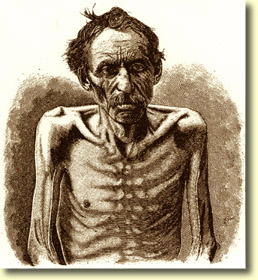
Friday, October 21, 2005
|
ROSE REMEMBERS Sweet article in the Wesleyan University student newspaper about Phyllis Rose retiring and moving out of her house on campus. Here’s how it ends (UD can’t resist one little style change…]: Rose said that Wesleyan has grown progressively more [UD believes “more” alone would be better than “progressively more,“ which sounds redundant to her] bureaucratic since the days when she began teaching. |
|
TEACHING TODAY A Regular University Diaries Feature Harry White, English professor at Northeastern Illinois University, teaches by example. But what a curious example it is. Here's an example of his writing (I got this from Erin O'Connor) -- writing of which he was so proud that he published it in a campus newspaper (he's complaining here about some anti-gay people who came to campus recently and made anti-gay noises): And they should all go **** themselves--and I hope it hurts when they do and that they catch a disease and puke all over themselves and die, horribly, somewhere near Clark and Diversey [in Chicago] where four off-duty male nurses, all clad in black leather, remove their bodies to a nearby hospital where they are cleansed, disinfected, dressed in women's clothing and dumped into a sewer. Fascinated by his prose style, I raced to White's faculty webpage, where I found this sardonic commentary on the futility of it all... or is he cleverly punning on his last name? Whatever -- the top of the page has his name and phone number, and then the rest of the page is like a Rothko canvas or a Mallarme poem -- lots of white.  UD is getting pretty frustrated with the tendency of some professors to have webpages and then put nothing on them (see in this connection also the Washington State University professor of education I blogged about recently). |
|
RIDER MOUNTS WET HORSE In the interests of balance -- they're mixing it up at the Harvard Crimson too: When Benjamin A. Ladner first took the reins of American University (A.U.) in 1994, the Washington, D.C.-based private school was awash in turmoil and tainted by controversy. Board members did not expect Ladner to add to the scandal. |
Thursday, October 20, 2005
|
BLOG THAT METAPHOR A regular University Diaries feature, in which UD highlights profoundly mixed metaphors in university writing. This example is from today’s Yale Daily News : The competing ideals of the caring, stay-at-home mother and the high-powered career woman have collided for decades, and Ivy League schools have often been breeding grounds for the latter. In a New York Times article last month, Louise Story '03 SOM '06 tackled this issue, igniting controversy by asserting that most Ivy League women want to forgo career success for family. |
|
DO YOU UNDERSTAND… …the complexities of race, power, gender, class, sexual orientation and privilege in American society? UD does not hesitate to admit that she does not. In trying to envisage the paragon that does, she pictures the World’s Ultimate Critical Theorist, a pale foucauldian kept  functioning with massive transfusions from the undead… functioning with massive transfusions from the undead…And yet at Washington State University’s school of education, the overwhelming majority of students reviewed for inclusion in the program under this standard have been admitted and retained. Judy Mitchell, dean of the program, explains. "We've evaluated 1,364 students under our current standards over the past three years and 1,330 have been recommended for teacher certification." Not only that, but, this morning’s AP article continues, “Of the 34 who haven't been recommended, some are still doing their student teaching, while others had health problems or a change in major, [Mitchell] said.” In short, virtually all of the people who apply for admission to this education program understand the complexities of race, power, babadeebabadeebabadeeba. But now, Washington State University is reviewing its policies on evaluating the character of students in the teacher training program after a student alleged the College of Education was biased against conservatives. Something in the way the form is worded, it seems, has allowed WSU to dismiss a student in very good standing because he’s politically conservative. (For details, go here.) Dean Mitchell doesn’t see what the fuss is about. The “issue has been blown out of proportion.” Yet how much can a woman whose online cv is 25 pages of tiny type know about proportion? |
|
UD Checks in on Doings At her alma mater, Northwestern University Student Group Faked Abduction |
Wednesday, October 19, 2005
RETURNS ACCEPTEDLOS ANGELES - Wal-Mart heiress Elizabeth Paige Laurie, accused of paying a fellow college student $20,000 to do her homework, has returned her University of Southern California degree, officials said. |

|
Excerpts from Andrew Hacker's review essay in the latest New York Review of Books. [N]eed is viewed generously and aid is now given to students from families with six-figure incomes. Yet budgets at all of the twelve leading schools except MIT expect that the full tuition amount be paid by at least half of the applicants they enroll. The result is that students whose parents can pay the full amount will have an extra edge. |
Tuesday, October 18, 2005
 SNAPSHOTS FROM HOME SNAPSHOTS FROM HOMEAn ad on the Metro this afternoon: WILL YOUR ENCRYPTOR WORK HERE? |
Monday, October 17, 2005
|
DUKE TO DURHAM: CULTURAL COMPETENCY CUTS BOTH WAYS In a move seen as possibly setting a precedent for universities across the nation, Duke University today mandated cultural competency training for all landlords and neighbors of their students in Durham. “Diversity in this great nation cuts both ways,” explained Duke’s provost in a press conference hastily called this afternoon in response to the latest arrest of a group of undergraduates. “We all know we need to demonstrate the ability to deal with disadvantaged people, and people of different ethnicities, and so forth. But the offspring of America’s affluent represent every bit as legitimate a culture as, say, the Hmong, or the Amish. It’s time for the shopkeepers and homeowners of Durham to demonstrate that they understand the cultural backgrounds and sensitivities of our student population, and to behave accordingly.” To that end, he continued, Duke has decided to mandate two-week summer diversity training sessions for citizens who interact on a regular basis with Duke students. Asked to be more precise about what he had in mind, the provost said: “Well, let me give you some examples. Last September, there was a pool party at some luxury apartments near campus. Police described it as ‘a chaotic scene of profanity and drunkenness.’ Those are words designed to hurt. They stereotype an entire group. Now, as the police rounded up the students, one of the students said, ‘Hey, everyone, as soon as you get out of high school, you can become a Durham police officer.’ The police apparently found this statement offensive. A little sensitivity training will help them understand that in these students’ world, vicious comments directed at people who are not rich are a rite of passage.” To underline how cohesive the culture of the children of the affluent is, the provost cited a strikingly similar case in Cambridge, Massachusetts last year, as reported in the Boston Herald: When police tried to break up the party of 50 people, three residents and a guest allegedly became 'belligerent' and refused to cooperate. ``(Expletive) you,'' Mark D. Lees, 25, of Allston allegedly yelled at the officers. Lees told officers the party was full of Harvard fans celebrating the Crimson's win over Yale and that the officers 'had no idea who they were messing with.'" “’No idea who they were messing with.’ It’s the same culturally-inscribed locutional act, intended to alert people who are not rich to the fact that they are of no account and subject to the retaliatory power of the wealthy. You see it again and again in this cohort, and you need to be ready for it.” Very much not ready for it was one resident of Durham, about whom the provost complained sharply. “Here’s someone knowingly living next door to a group of our students, people whose money, and whose parents’ influence, make them virtually untouchable by a woman like her. Yet foolishly, during a party at their house, she confronted them.” He quoted from a newspaper account: "I was like, 'Hey, why are you throwing trash in my yard? Pick it up,'" [the woman] said. "They were very belligerent. A lot of the guys were yelling at me, saying I had gotten them kicked out of their house last year. I don't know if that's why they were peeing on my house, but it wasn't me who got them kicked out. I've only been here a year." “This woman got so many things wrong in her attempt to interact competently with our students that I don’t know where to begin,” the provost remarked. “Let’s just say that she’s already been enrolled in our inaugural summer session.” ********** UPDATE: Very proud to say that this post has been picked up by the editors of the latest Carnival of Education. |
|
Marauding Marsupial In Waiting UD really identifies with this morning’s Spiegel interview with Chancellor-in-Waiting Angela Merkel: SPIEGEL: Have you felt trepidation creeping in these past few days? Actually, UD is not immune to the seduction of power. Having clawed her way up to Adorable Little Rodent in the Truth Laid Bear ecosystem, she has every intention of continuing to claw… |
|
BENJAMIN LADNER: LAND OF CONTRASTS If you like this sort of thing. |
Sunday, October 16, 2005
|
Puking in Providence From the Telegraph, UK: Despite Lady Gabriella [Windsor's] academic and romantic success in America, there is, however, one aspect of campus life that she may warn [Princess] Beatrice about. Shortly before she graduated, she wrote about the social life at Brown University, documenting her fellow students' alcohol abuse, drug taking, sexual licentiousness and all-round bad behaviour. |
|
A website that’s there but shouldn’t be. A website that’s not there but should be. The website that’s there but shouldn’t be belongs to Western Oregon University professor Gary Welander (we met him earlier at University Diaries, here). Although convicted years ago of sexual abuse, and although forced to settle big money on one of his university students because of similar abuse, he has been able to hold onto his job at WOU because, for reasons unknown, the place tenured him. The best the university could come up with by way of punishment was a one-semester suspension. His colleagues were so appalled he’d be back on board, everything hunky-dory, teaching two courses the next semester, that they wrote a letter to the university president begging him to reconsider. That president left, and the new interim president said okay, he won’t teach. Instead, he gave Welander a new job, at full salary, “tracking the academic eligibility of student-athletes .” Although Professor Welander has now been prevailed upon to retire, his chatty WOU website continues to tout his expertise in “Personalizing [the] Classroom Climate.” The invaluable Robert KC Johnson, at Cliopatria, describes the “dispositional” bullying of students at Washington State University by the school’s education faculty (for background on the testing of education students for the right disposition, go here). UD is particularly impressed by one WSU ed professor, who urged the ouster of a dispositionally non-conforming student, a mature man who is the father of four mixed-race children. He is, she wrote in official correspondence, a “white supremacist,” with “emotional problems that are manifested in his racist beliefs.” She goes on to note that the student is a hunter and sometimes wears a hunting cap to class. However, he “never made any personally threatening comments to me.” This chick is some dispositional Stakhanovite. She roots out racists and gun nuts whom the rest of us might miss. UD wants to know more of her. Johnson links to her website. But when UD raced over there, emptiness was all she found. *** Update: John Leo weighs in on the Swan case and disposition mandates. |
Saturday, October 15, 2005
|
UD Assiduously Keeps Track Of Totally Predictable Developments Like this one, as described in a recent Wall Street Journal (subscription) article, The Laptop Backlash; Wireless Classrooms Promote Messaging and Web Surfing, Not Learning, Professors Say : Bringing laptops and wireless Internet access into classrooms was supposed to enrich classroom discussions by, for example, allowing students to import information from the Internet and share it with the rest of the class. But instead some students are using their laptops to message friends, shop online, peruse Web sites and pursue part-time jobs. The result: There is a rising backlash against classroom computer use from professors and schools. Via Joanne Jacobs , who got it from TaxProf Blog . |
|
LEANING EVER MORE LEFT “Apparently, despite their greed and other failings,” says conservative New York Times columnist John Tierney with studied irony, “many conservatives do want to become scholars, but they can't find work on campus.” Once again we’re into the question of why there’s an absurd overabundance of mid- to way-outfield lefties in American academia. Although he’s been assured by lefty academics that conservatives (UD’d include centrists and certain variants of classical liberals in the absent group as well) aren’t at universities because conservatives are too money-grubbing to tolerate academic salaries, Tierney remains skeptical of this explanation (also of the conservatives are dumb and conservatives can’t deal with ambiguity or independent thought explanations). So off he goes in search of better ones, in particular the law of group polarization and the false consensus effect: They're subject to the law of group polarization, derived from studies of juries and other groups. "If people are engaged in deliberation with like-minded others, they end up more confident, more homogenous and more extreme in their beliefs," said Cass Sunstein, a law professor at the University of Chicago. "If you have an English or history department that leans left, their interactions will push them further left." This sounds right to UD, who has been in dissertation defenses where the claim that North Korea is a far superior country to South Korea was greeted with unanimous nods, while the claim that there might in the course of human history be situations in which American military involvement in other countries would be justifiable was met with histrionic incredulity.  The most charitable faculty mode of response UD has seen to arguments from the center or the right of the political spectrum is wide-eyed pity, as in weep for what little things can make them etc. etc. Tierney concludes: But how many big ideas from liberal academics are on anyone's agenda? Democratic politicians are desperately trying to find something newer than the New Deal to run on next year. They're glad to take campaign contributions from professors, but they're leery of ideas from intellectuals who've have been talking to themselves for so long. Via ann althouse |
|
WALTER BENN MICHAELS On The Feel-Good University [Selective university admissions in America] have become our primary mechanism for convincing ourselves that poor people deserve their poverty, or, to put the point the other way around, they have become our primary mechanism for convincing rich people that we deserve our wealth. |
Friday, October 14, 2005
|
I remembered, today... ...a passage from a lesser known Wayne Booth book (Booth died a few days ago), Modern Dogma and the Rhetoric of Assent (note cool cover - I want to be sitting at that table!) which I'd always found moving: It is Easter time, 1971, and I am sitting in Orchestra Hall in Chicago, listening to Bach's St. Matthew Passion. After the final grand chorus, climaxing more than three hours of listening, I sit in the silence - we have been asked not to applaud - with tears in my eyes. As I recover what we call my "self" slightly, I become aware that my wife on one side and my sixteen-year-old daughter on the other are weeping too, and that in fact handkerchiefs are visibly and audibly at work all over the hall. As we get up to leave, I meet a friend who is ordinarily loquacious; he lowers his reddened eyes and does not speak. Later in the corridor, another friend, ordinarily fluent, says, "That was really..." and bogs down, unable to say what it was, really. |
|
ALOHA, ALTHOUSE READERS. Feel free to look around. |
| Even UD's getting in on the act. |
|
Professor Anxious About Iraqi Vote More Soltan family press coverage. |
|
Timothy Burke on Obsolescence What one is complaining about, however, in attacking the way tenure works within ... specific institutional cultures and across academia as a whole is not something like cronyism. It’s about administrative structures like departments, about the premium that the organization of academic places on inward-turning specialization, about modes of achievement that often rest on bygone publishing regimes and practices of readership which have no more than a decade’s worth of life left to them. |
|
Well, well... ...this is a new one on me. Even as I blog, my English 137: Modernism students are taking a midterm in front of me. Exam blogging! It may not be impressive to you, but I think it's amazing that there's a computer up here for me to log onto and start blogging with while the little ones sweat over Gertrude Stein's inanities. Of course, as Thoreau and other technophobes anticipated, now that I've got this remarkable capacity, I have nothing of value or interest to say. The sole interest of this post lies in its taking place simultaneous with my administering a midterm at my university. |
|
The new Wendy Wasserstein play… …titled Third, sounds intriguing. It’s just starting to be performed in New York (performances are sold out). The play, a fellow blogger writes, concerns a fictional college professor (Dianne Wiest) -- the author of books such as “Girls Will Be Boys” and a feminist interpretation of “King Lear” as “the girlification of Cordelia” (since Cordelia, unlike her heroic sisters, does not revolt against the patriarchal power structure). The plot revolves around the professor's accusation of plagiarism against her student Woodson Bull III -- a live white male who is “practically a walking red state." A reviewer says that “The play's mostly gentle satire on the academic life, particularly the gender studies field, is on target, and occasionally hilarious.” And a reader on the reviewer's site comments: What I also found sort of brave was Wasserstein's characterization of "biased liberals," of the intellectual bigotry those of the Democratic Party persuasion have against people who don't think like them, who are "bad" because they don't share their liberal politics. For such an obviously left wing writer, she shows wonderful balance, never really skewing the scale toward conservatives, but more or less pointing a finger at liberals who hypocritically judge others … |
   You don't have to be a nerd like UD to want these and the other fifteen or so Penguin Mugs, but it helps. You don't have to be a nerd like UD to want these and the other fifteen or so Penguin Mugs, but it helps.
|
Thursday, October 13, 2005
|
There’s... ... some funny stuff in here, and I totally trust you to find it, but to make absolutely sure you do, I’ve bolded it. Miers' Academic Background Draws Scrutiny WASHINGTON — The numbers are irrefutable, evidencing something beyond a trend and approaching a requirement. Over the past 50 years, 20 of the 25 people nominated to the U.S. Supreme Court have graduated from the nation's elite law schools; either an Ivy League institution, Northwestern or Stanford. Five current justices are graduates of Harvard Law School, a sixth attended there before graduating from Columbia Law School. The others are alums of the law schools at Yale, Northwestern and Stanford. Now comes nominee Harriet Miers, holder of undergraduate and law degrees from Southern Methodist University, a fine Dallas institution generally ranked somewhere beneath the Ivys and Stanfords and Northwesterns. At SMU, they couldn't be prouder. "As a graduate of both our undergraduate program and our school of law, she brings honor to SMU through this nomination and through her distinguished legal career," SMU President R. Gerald Turner said when the appointment was announced. Despite the hometown pride, some Miers backers, confronted by opposition from some conservatives, perceive an academic snobbery being trained on the nominee's lack of an elite education. On "Meet the Press" this week, Miers backer Richard Land, president of the Southern Baptist Convention, said some of the conservative trepidation about Miers "has the scent and whiff of elitism about it." "I'm a graduate of Princeton, and I just want to say you don't have to go to an Ivy League school to be on the Supreme Court," Land said. Land's "whiff of elitism" comment echoed a phrase reportedly used by Ed Gillespie, the former GOP national chairman named by the White House to help shepherd Miers' nomination through the Senate, in a meeting with conservatives upset about the selection. On Wednesday, the Family Research Council, a conservative group that has taken no position Miers, said charges of elitism lobbed against Miers' critics "may be doing more harm than good." "Many of those who are criticizing this nomination would have favored any of a host of other candidates for the Supreme Court, including many women and graduates of non-Ivy League law schools," the council said in a statement also aimed at Miers' backers who have accused critics of sexism. The council also noted it has backed high-profile Bush judicial appointees who attended law school at UCLA, Baylor, University of Mississippi and Tulane. On the Democratic side, Senate Minority Leader Harry Reid of Nevada has come to Miers' academic defense. "I don't want to denigrate in any way Ivy League schools," said Reid, a graduate of the George Washington University Law School, "but I think that that should not be a requirement to become a clerk or a judge." Some conservatives aligned against Miers said they expect to be accused of elitism. "But this is not about the Ivy League," columnist Charles Krauthammer wrote in a scathing criticism of Miers' nomination. "The issue is not the venue of Miers' constitutional scholarship, experience and engagement. The issue is their nonexistence." And, Krauthammer wrote, "the Supreme Court is an elite institution. It is not one of the 'popular' branches of government." Currently atop one of the popular branches of government is an Ivy Leaguer who likes to distance himself from the Ivy League. President Bush (whose wife Laura is an SMU alum) is a Yale (undergraduate) man and a Harvard (business school) man – as well as the product of a tony New England prep school. But, at crucial times, he has chosen to define himself by ignoring that pedigree. In March 1999, while announcing his presidential exploratory team, Bush differentiated himself from his dad (a prep-school-and-Yale man) by talking about their grade schools. "I went to Sam Houston Elementary School in Midland, Texas. And he went to Greenwich Country Day in Connecticut," said Bush, turning his back on the back-East sheepskins he picked up. In May 2001, Bush was Yale's commencement speaker, a selection that brought considerable protest on a campus still cranky about the outcome of the 2000 election. Bush simultaneously embraced and distanced himself from his Ivy League pedigree. "My life began a few blocks from here," said Bush, born in New Haven while his dad was a Yale student, "but I was raised in West Texas." In West Texas, Bush's Ivy League pedigree was used as a negative against him in 1978. Former U.S. Rep. Kent Hance, now a Bush backer, recalled reminding voters about Bush's educational background and saying, 'Look, the problems we've got in America today, most of them came out of the so-called brains out of Harvard and Yale." "That went well," Hance said of the tactic. But Hance also said Bush had an effective counter. "It played well if they hadn't met him," he said of painting Bush as an Ivy Leaguer. "If they met him he came across as a good ol' boy." To this day, Bush — who was rejected by the University of Texas Law School — sometimes likes to fuel the anti-intellectual image hung on him [UD note: This is bolded because it's a hell of a mixed metaphor] by others and fostered by his penchant for mangling the language [and because it takes place in a sentence about people who mangle the language] and taking the chain saw to brush on his ranch. "Well, I think I'll go read a philosophical novel," Bush, trail mud splattered on his shirt, joked to reporters after a grueling bike ride on his ranch in August. …Charles Evans Whittaker [was] a 1924 graduate of the Kansas City School of Law (now the University of Missouri-Kansas City School of Law) and a 1957 appointee of President Eisenhower. Whittaker resigned five years and a nervous breakdown after donning his high-court robe. "He found decision-making excruciating and almost impossible," said a biography posted on the oyez.org Web site, a collection of Supreme Court information. |
HAROLD PINTER... just got the Nobel Prize in Literature. |
|
LADNER’S SEVERANCE A Modest Proposal As American University trustees bicker and, one by one, quit over the question of Ladner’s severance (whether he should get anything at all; how much he should get), UD would like to make a suggestion. There’s no real possibility, she would argue, of AU giving Ladner nothing by way of settlement. The real question is how much he should get -- as a settlement now, and as salary in the future (he will almost certainly be given a tenured position on the faculty). The specific problem in Ladner’s case is that he and his family have become accustomed over more than a decade to an extremely luxurious standard of living. It would be an obvious injustice for the university, having familiarized the Ladners with the life of the very rich, to demote them to the life of the merely rich. AU therefore needs to find precedents that will allow the institution to arrive at a reasonable accommodation for the Ladners; and the most pertinent precedent can be found, I think, in the notorious “severance” of Ronald Perelman and Patricia Duff a few years ago. Here, you will recall, the issue was how much child support Ms. Duff, who retained primary custody of their then-four-year-old daughter, would receive. Although she had a personal fortune of roughly twenty five million dollars when she met Perelman, Duff assumed billionaire status when they wed. At the dissolution of their brief marriage, she was understandably anxious that their daughter continue to live not Duff’s multi-millionaire, but Perelman’s billionaire, existence: Patricia Duff knows what a 4-year-old girl needs to live a ''moderately luxurious'' life on a ''rough parity with an Upper East Side family'' -- about $4,400 a day. That covers lodging in a $5 million 10-room apartment on the Upper East side and a house in the Hamptons, $2,500 worth of ''prints'' for her closet and $1,450 a month for dining out. At one of many court sessions (Duff went through thirty lawyers), Ms. Duff elaborated: On the witness stand yesterday, Ms. Duff presented a detailed budget listing Caleigh's monthly living expenses. According to Ms. Duff, she spends $9,953 each month on travel expenses for Caleigh and her nanny. A total of $3,175 a month is spent on clothing for Caleigh, and $3,585 on ''recreational'' activities, she said. The cost of Caleigh's personal domestic employees -- apparently nannies and maids -- is $30,098 a month, and the 4-year-old dines out at a cost of $1,450 a month, Ms. Duff said. Underlying Ms. Duff’s demands, she said, was anxiety about her child’s "self-image and psychological well-being," which would be harmed if the child grew up in the relative poverty which Ms. Duff, in this context, represented. “Ms. Duff, who lives in a $30,000-a-month apartment in the Waldorf Towers, had argued that Caleigh would be hurt emotionally if she realized that she was living on less than what was being provided for her half-sister…” Ms. Duff (who has a very odd blog), underwent, like President Ladner, that Cinderella experience of being swept up out of her down-market life into the glitter of hyperaffluence. Her rage at her ex-husband’s refusal to compensate her and her daughter at the level to which they had become accustomed, and her raw terror at the prospect of the child’s psychological dissolution (something all mothers can relate to), produced one of longest and most destructive divorce battles the New York courts have ever seen (indeed, if UD is reading the news reports correctly, the couple is still in court seven years later). It’s all the more important, then, assuming Ladner harbors similar rage and fear as he anticipates his own family’s relative proletarianization, that AU determine as precisely as it can how much he was living on during his tenure as president, and seek to replicate it. If AU fails to follow -- call it the Duff Doctrine -- the result will be protracted and expensive lawsuits for the university into the indefinite future. |
Wednesday, October 12, 2005
|
Inside Higher Ed Presents The Expense Account Hall of Shame |
|
It's quiet over there. Too quiet. Ladner did not return phone calls made yesterday to his university-owned residence. |
Tuesday, October 11, 2005
|
MR UD… …will discuss the Iraqi constitution tomorrow on Minnesota Public Radio: Wednesday, Oct. 12, 2005 HOUR 1: (9 a.m.) Iraqis prepare to vote on new constitution |
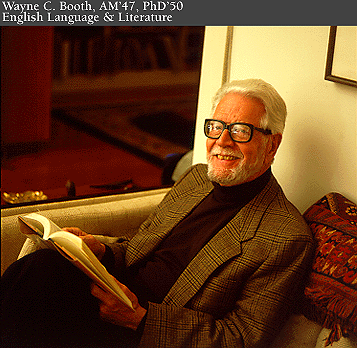 Wayne Booth has died, age 84. He was UD’s thesis director at the University of Chicago. He it was who (as UD recounted in an early entry on this blog), hearing from another student that UD was on the verge of quitting grad school, hauled her into his office for a serious talk. I’ve always been grateful to this man, for many things, but especially for his having persuaded me to stay (of course his whole bit, as the New York Times obit notes, was the use of rhetoric). Wayne Booth has died, age 84. He was UD’s thesis director at the University of Chicago. He it was who (as UD recounted in an early entry on this blog), hearing from another student that UD was on the verge of quitting grad school, hauled her into his office for a serious talk. I’ve always been grateful to this man, for many things, but especially for his having persuaded me to stay (of course his whole bit, as the New York Times obit notes, was the use of rhetoric). Yet how scandalized UD was when she first encountered Booth in a seminar room! Fresh out of Northwestern, where she’d glombed onto Erich Heller, a tortured refugee from the Holocaust who dealt only in the densest and highest European modernism, she didn’t know what to make of the fact that the first novel Booth’s seminar took up was Wright Morris’s Ceremony in Lone Tree, one of them stark, thin, flat in the middle of nowhere, not much to say American landscape type things. Bah! And I still say bah. But Booth was intriguing - a handsome genial big old all-American (“[Booth was] born on Feb. 22, 1921, in American Fork, Utah. His family was descended from Mormon pioneers, and as a young man he embraced his faith, becoming a missionary in Chicago. But little by little, he began to wrestle with church teachings. It was a struggle, he later said, that informed both his decision to root himself in the secular world and his particular interest in rhetoric.” This bears a remarkable non-resemblance to UD.) who managed to be at the same time an authentic intellectual. He was courtly and kind with us, but also demanding and focused, and his clarity of thought enabled us to think profitably about literary genre. Because he was an Aristotelian. He’d been a student of the Chicago Aristotelians, a group interested in isolating the unique characteristics of the literary (it’s now fashionable to steamroll right over even the hint of an interest in this question as you power your way toward vast political claims of the sort Ophelia Benson ridicules a couple of posts down from this one). Booth wanted to understand the precise aesthetic and ethical act the writing and reading of literature represented, as the Times notes: [For] Professor Booth, literature was not so much words on paper as it was a complex ethical act. He saw the novel as a kind of compact between author and reader: intimate and rewarding, but rarely easy. I'll always think of Booth as part of that cohort of sly old guys at the University of Chicago -- guys like Norman Maclean, whose earnest deep-rooted all-Americanness could fool you into thinking they could never write something as dark and elusive as A River Runs Through It. |
|
ONE MORE ON JERZY. From the Harvard Gazette. |
|
Oh brave new world That has such University presidents In it Thoughtful opinion piece in the Baltimore Sun about Ladner and his precursors, including one who managed to slip past UD’s radar. He’s another local -- the short-lived president of Maryland's Towson University: Towson University President Mark Perkins was forced to resign in 2002 after less than a year on the job amid disclosures that he had overseen more than $1 million in college-paid upgrades for his university-owned residence , expenses that included a $25,000 plasma-screen television and an $80,000 elevator. Perkins also commissioned a $25,000 gold medallion to wear at his inauguration.  Perkins sounds uncannily like Carmen Ghia (he's on the far right, with the gold chain). Perkins sounds uncannily like Carmen Ghia (he's on the far right, with the gold chain).The Sun writer claims that most of the naughty president stories come from “upwardly mobile universit[ies]…at decidedly un-elite institutions,” at “workmanlike institutions striving to raise their reputation.” The trustees were partly to blame for their fiascos because they “encouraged [these presidents] to lead a life of luxury, in hopes that this would help project a positive image for the institution.” Act rich, get rich kind of thing. But don’t forget that no less an institution than Stanford about a decade ago featured an absolutely by-the-books lavish president scandal, as the Chronicle of Higher Ed recounted at the time: [M]uch of the uproar has focused on extravagances for the university-owned president's home, the Lou Henry Hoover House … Mr. Kennedy has been ensnared in the controversy from its outset. Stanford had charged the government for part of the cost of such items as flowers and antique furniture at the house, as well as for depreciation on a university-owned yacht, the Victoria. Kennedy’s expenses, according to another Chronicle article, also included “flowers, antiques, and $7,000 bed sheets.” But it’s all for a good cause: Sheldon Steinbach, general counsel for the American Council on Education, says there is something to Ladner's defense. College presidents today are expected to spend so much of their time fundraising that universities are justified in picking up many of their expenses, and in paying for the kind of luxury that will impress a potential donor. This is especially true in Washington, he said, where the bar for entertaining is very high. Ooh la la, oui, that is so. The bar is so high here in fact that unless you live in a super mansion whose unrestricted view of the Potomac River you got by illegally cutting down all the trees that blocked it, you don’t entertain at all. I didn’t want to tell you about this, because I feared you would feel envious of our lifestyle here in Washington and turn against me. |
|
Sometimes it's important to let other people be cruel for you. Ophelia Benson, Butterflies and Wheels: There was this lecture, see. And it was full of new, profound, fresh, original, searching stuff that no one had ever thought of or said before. Not a word of it was stale or familiar or old news. Jasbir Puar, an assistant professor in the department of Women’s and Gender Studies at Rutgers University, spoke on “Queer Biopolitics and the Ascendancy of Whiteness” yesterday in Stimson Hall to provide a theory for the way race and sexuality affect U.S. and international politics...Puar’s was the first of a series of lectures sponsored by the Feminist, Gender, and Sexuality Studies Department that “seek to explore the future of queer studies"...The series of lectures are also a “concerted effort to talk about race and imperialism...” Well great! That should cover it. That should pretty much dot all the eyes and cross all the tease. Terrific. Women, gender, queerness, biopolitics, whiteness, race, sexuality, U.S. and international politics, feministgenderexuality studies, queer studies and its future, raceandimperialism. A modest menu! A humble, self-deprecating agenda for the various Studies departments. I suppose they really ought to have sorted out capitalism and acne while they were at it, but still, it's a good try. Puar said her lecture explored the “intersections of sexuality and the war on terror, specifically how some [lesbians, gays, bisexuals, transgendered and questioning individuals] are complicit with nationalist, racist, and orientalist politics of the U.S.” Fan-tastic! It's about time someone cleared that up. I've been fuming for years now about the way lesbians, gays, bisexuals, transgendered and questioning individuals, violinists, beet-pickers, cats, goldfish, and lentil farmers are complicit with nationalist, racist, and orientalist politics of the U.S., and I've been wondering when someone was going to point it out. At least Puar has made a start! Props to her eh. The core of Puar’s lecture, underlying the theory and terms, focused on identity. Puar began her work as a graduate student after four years of travel around the world, where she realized her self-identity changed wherever she traveled. In an interview with The Sun, she said identity is complicated, that it is a localized concept, and that who you are depends on where you are. Oh my god!! Identity is complicated! It can change, depending on circumstances! Wow! Who ever knew that, who ever imagined such a thing? The insight is staggering. It's like Freud's discovery of the unconscious, or Homi Bhabha's discovery of liminality, which is also about the staggering discovery that identity is complicated. What a precious hour that lecture must have been, how fortunate the interdisciplinary people of Cornell who were there to hear it. She said the ideas of her lecture are important because they “complicate single identity politics” and that organizing and activism on many college campuses focus on only one identity. Yes. You bet. Important. Yes. Very important. Well done. 'Complicated - identity complicated.' Important idea. Yes. Shirleen Robinson grad explained the idea of the dilemma of identity Puar proposed in her lecture. She said that if a guy wearing a turban is the victim of a hate crime and it also turns out he’s gay, one must analyze what identity his attackers intended to target. She said his identity can be read in different ways; his Arab identity is associated with terrorists and 9/11, while harems and a mystique of hypersexuality are associated with his sexual identity. Err...yeah, and his jeans and T shirt are associated with creeping Americanization and the Starbucks cup he is holding is associated with globalization and the copy of Discipline and Punish he is carrying is associated with Paris and the Marlboro he is smoking is associated with cowboys. Could keep the analyzers busy for some time. “I think there are ways of talking about diversity and inclusiveness that embrace initiatives like open hearts, open minds,” Villarejo said, but added that “a lot of those communities are deeply homophobic” and that we need to “make sure discourse of inclusivity is also offered” to queer African Americans, queer Asian Americans, and queer Latinos. You forgot queer Native Americans! And queer Muslims! And queer disabled African Americans! And queer disabled - stop, cut it out, what are you doing, get off, help, let go of me |
|
Je m'en fous fous fous fous fous fous fous John Tierney at the New York Times shares UD’s amazement at certain American law and journalism school stats [for UD’s earlier amazement, go here]: WHERE CRONIES DWELL |
|
Plagiarism Popup Doll at Penn Plagiarism charges within Penn’s department of sociology keep getting batted down, only to pop back up again. [See this recent post of UD’s for background. Scroll down.] Here’s today’s intriguing article in the Penn student newspaper: Prof Declares Himself Victim of Plagiarism: ***Update: The Chronicle of Higher Education (subscription) has much more detail. |
Monday, October 10, 2005
|
LADNER FORCED TO ABDICATE Washington Post, this evening: American University trustees announced Monday night that Benjamin Ladner will not return as president after a months-long investigation into his spending. AU has already put the announcement up on its website. [Thank you, John Heywood, for alerting me to the news.] |
  Terissa Schor |
 Congratulations... ... to Thomas Schelling, an acquaintance of UD's with whom she shares a love of Henry Purcell's songs, for having won the Nobel Prize in economics: STOCKHOLM (Reuters) - Israel's Robert Aumann and American Thomas Schelling won the 2005 Nobel economics prize on Monday for their "game-theory analysis," which can help resolve conflicts in trade and business -- and even avoid war. |
|
ENORMOUS CHANGES AT THE LAST MINUTE I know I said the Ladner drama would play out long and loud, but this is getting ridiculous. On the eve of tomorrow's (er, that'd be today's) trustee meeting, at which the group is expected to vote to oust Ladner, the chair of the board has suddenly resigned: Acknowledging that the board's "tortured deliberations" had "taken an inappropriately long time," Bains, in her statement, accused Ladner of fighting "every aspect" of the probe. She said he failed to produce documents and he claimed "that the University is contractually required to pay for every limousine ride to his gym to work out and every item of food and drink that he consumes, with no tax consequences to him." She seems to be resigning because she herself has become a divisive figure. Although it sounds as though her leaving won't make any difference to the vote's outcome, the equally important severance question might be more difficult to settle intelligently without her there. She sounds basically furious at Ladner and eager to reform the university radically: Bains recently proposed a plan that included annual audits of senior officers, student and faculty representatives on the board, more oversight and zero tolerance for financial and ethical lapses. No doubt this plays as far too much transparency-zeal to board members like David Carmen, reportedly a persistent defender of Ladner, and one of the more rancid Washington lobbyists. Part of the social world that swirls around the likes of Jack Abramoff, Carmen has enriched himself mightily by lobbying for the vile dictator of Kazakhstan: Carmen Group’s most notorious client is the corrupt regime of Kazakhstan President Nursultan Nazarbayev. U.S. authorities are probing how $115 million from Amoco (see David Work), Phillips Petroleum and Mobil landed in the foreign bank accounts of Nazarbayev and his top officials. In a solicitation obtained by the Financial Times, Gerald Carmen [father of David] offered to burnish the regime’s U.S. image for just $1 million. |
Sunday, October 09, 2005
|
EVENTS TOMORROW, AMERICAN UNIVERSITY Via benladner.com: FOR IMMEDIATE RELEASE: |
|
NOUS BLOGGEURES… are fond of comparing the speed of blogging to the speed of the mainstream media, and here’s an example just for UD. UD has in the last three weeks generated so many satires about Benjamin Ladner that she’s got galloping satire fatigue. This morning, the Washington Post produced its first Ladner satire. Here are a couple of excerpts, in which a columnist describes a dream he had a few nights ago (thanks, Lee, for the tip):
|
|
I’LL SEE YOUR UNBELIEVABLE AND RAISE YOU AN INCONCEIVABLE It’s “unbelievable.” They’re “stunned” and “dismayed and “bewildered,” say a bunch of university presidents asked by the Washington Post to comment on American University President Benjamin Ladner. “He should be gone,” University of Miami President Donna E. Shalala tells the newspaper. Other university presidents “scoffed at the notion that a president has to spend tens of thousands of dollars to raise money. ‘My experience is that the truly wealthy philanthropists don't want you to spend money like that,’ said Patricia McGuire, president of Trinity University in Washington. ‘I took a big donor to lunch the other day at Union Station. That's where she wanted to go.’” Above all, it’s a values thing. “Administrators also say that they must view themselves as role models for students and that Ladner's lifestyle does not set a good tone. ‘It's a values issue as much as anything else,’ McGuire said. ‘We have to reflect values that we expect our children to learn.’” In short, “the situation at American is not reflective of universities in general and would not happen at their schools.” No one wishes this were so in general more than UD, who would like nothing more than to close up shop here at University Diaries because all American universities are ethically run to the highest intellectual standards. But while she admires the particular university presidents described in the Post piece, she thinks a little context is in order. Here’s a recent New York Times story, for instance, that finds presidential behavior at many of our universities fully as “inconceivable” as the interviewed presidents find Ben Ladner: IVORY TOWER EXECUTIVE SUITE |
Saturday, October 08, 2005
BlogoscopyIn a case seen boosting the credibility and profile of blogs as sources of news and opinion, the Delaware Supreme Court this week found that four bloggers accused of defamation had the right to remain anonymous…. Chief Justice Myron Steele … called the Internet ... a "unique democratizing medium E-Commerce News |
|
DIPLOMA MILL WARS HOTTING UP IN WYOMING, STILL THE GO-TO STATE FOR BOGUS CREDENTIALS From today’s Caspar Star Tribune: BUCHANAN SLAMS DIPLOMA MILLS For an earlier UD post on Wyoming's enduring love affair with diploma mills, go here. When you go to this post, you'll be directed to quite a few others on the subject. |
|
Blogoscopy MR. TECHNORATI’S COLLEGE DAYS [David Sifry, the founder of Technorati,] is that very rare thing, a geek who can use his right brain (social interaction) in addition to his left (computer code). On the left side, his geek credentials are impeccable. He has a degree in computer science and has been founding start-ups in Silicon Valley for a decade, dealing mostly with such nerdy obsessions as open-source software and radio-spectrum allocation. But rather than sporting a pocket protector and buck teeth, Mr. Sifry has hints of a beer gut. While getting that computer degree, he boasts that he was “on and off academic probation” because he “always partied.” After college, he somehow found himself as the only gaijin in a Mitsubishi Electric factory in Japan. His speech is amiable Californian, peppered with “fucking” this and “fucking” that, in the excited tone of those surfing the nearby beaches, rather than the internet. |
|
Blogoscopy EXCERPTS FROM Harriet Miers Blog!!! BACK IN THE SADDLE! |
|
SNAPSHOTS FROM HOME A Regular University Diaries Feature Staggering the Turkmen I went to a modest little party many years ago at a modest house in Washington. So modest was this affair and its setting that I can’t quite recall the purpose of the thing, but a faint memory of Mr. UD raising a glass in celebration of a couple about to be married suggests that it was an engagement party. (And if I’m recalling the couple in question correctly, the marriage lasted four months.) Although there were a few Beltway types of some wonkish renown there (James K. Glassman?), it wasn’t a huge or in any way formal deal. Many of us, for instance, were sitting on the floor of the house’s cozy living room. Late in the evening, a minor Central European diplomat noisily arrived -- in a large black chauffeur-driven limousine. His uniformed driver hauled the thing with some difficulty up the short narrow driveway of this modest house, and out of it, with great ceremony, came this puffed up functionary -- overdressed, preening, utterly ridiculous. I thought back on this moment when I read the following snippet from this morning’s Washington Post article about the ongoing Benjamin Ladner story: Though she had a university-supplied car, Nancy Ladner hired a limousine to take her to lunch with the wife of the ambassador of Turkmenistan. Barely a country, and not even the ambassador, yet Madame Ladner felt an urge to forgo her impressive but not impressive enough company car, and instead stagger the Turkmen with her limousined arrival. This petty self-assertion, this absurd haughtiness straight out of The Mouse that Roared, was underwritten by serious young people (and/or their parents) trying to get a college education. It’s snippets like these, rather than the broad stuff of legal challenges and tax implications, that will do in Ladner. |
Friday, October 07, 2005
|
OVER TO YOU, HIRAM HOVER... ...for a good summary of American University President Benjamin Ladner's simulacral performance at the Washington Post today. |
|
UD ASSUMES HER READERS KNOW… The Nobels are a bore; The Ignobels are where the spirit soars… |
|
Ladner, Act VIII Short Excerpt, Trustees’ Chorus One key issue under investigation has been the 1997 contract that Ladner signed with then-board chairman William I. Jacobs. Jacobs said in an interview Wednesday that he told board members there was a new contract for Ladner but did not have it passed around. I never saw a contract, I never saw it signed; Yet I know how malfeasance looks, And how we’ll all be fined…. |
Thursday, October 06, 2005
|
Oh, and in honor... of her recent fifteenth birthday, Anna Livia Soltan.  Yes, I know it's out of focus. But you get the idea. |
|
In honor of this year’s… …fiftieth anniversary of Allen Ginsberg’s Howl, UD offers Howl for Papers A poem inspired by this recent Call for Papers from English Professor Don Hedrick, Kansas State University: Papers can be on a wide variety of topics related to the conference theme of privacy and secrecy and the public sphere. I saw the best minds of my generation destroyed by Hypocritical Puritanism, evil dysfunctional shameful, dragging themselves through Christian streets at dawn looking for Laura Bush‘s private life, Left tacticians of despair burning for the ancient heavenly connection to the personal as the political, who poverty and tatters and hollow-eyed and high sat up smoking in the supernatural darkness of cold-water flats floating across the tops of cities contemplating vast rightwing conspiracies, organizing panels on tabloidization and the neutralization of the political, passing through universities with radiant cool eyes hallucinating outings and spinnings and Blake-light tragedies among the scholars of war, minds tenured in the academies for probing sexual dysfunction in conservatives, and for testifying that nothing makes a difference, ashcan rantings, battered bleak of brain all drained of brilliance in the drear light of Zoo, who sank all night in submarine light of Bickford's floated out and sat through the stale beer after noon in desolate Fugazzi's, listening to the crack of doom on the hydrogen jukebox… |
|
Ladner’s Legacy: A Pioneer in The Reform of Nonprofit Accountability “[Ladner's] spending and perks, and the very clear lack of understanding of what was necessary for university business versus his own enrichment, raise troubling questions about whether the governing board was doing its job," Sen. Charles E. Grassley, an Iowa Republican and chairman of the Senate Finance Committee, said in a statement he provided to The Chronicle of Philanthropy. |
|
MORE CAMPUS ART Birdsdunnit  University of Waterloo “The show examines the relationship of a traditional gallery setting with that of the natural environment. The transformation of the gallery challenges all of the human senses. Before the focal point of the installation becomes visible the viewer is struck with smells unfamiliar to most interior spaces. It isn't until the woven mass of vines is spotted that the viewer realizes the smell lingering outside of the gallery is that of dried foliage. Thousands of rope- sized vines form a nine foot natural monument that dominates one half of the gallery. The positioning and sheer mass of the piece creates a shrine-like presence that challenges the viewer for territory. The piece managed to push a room full of viewers to one side of the gallery, where they flocked like worshippers at a holy site. The collaborative team demonstrated strong knowledge of their found materials. The illusionary effects created by the natural objects are a pleasant surprise.” Uncle (War Junkie) Sam  Sonoma State "How some SSU art students might visualize democracy -- from hanging chads to variations on voting booths -- is the theme of a new exhibit called Visualizing Democracy: A Juried Student Exhibition at the University Art Gallery through January 5, 2005." |
|
WICKED GOOD When academic institutions spend a lot of money and make a lot of noise by way of insulting their students’ and faculties’ intelligence, they can expect public humiliation by way of wicked subversion. Adelphi University’s faculty changed the GOOD IS THE ENEMY OF GREAT signs their grotesque leader, Peter Diamandopoulos, slapped up all over campus to GREED IS THE ENEMY OF GOOD. When Pomona College professor Kerri Dunn turned out to have hate-crimed herself (she is now in prison), students there changed the slogan HATE FREE CAMPUS, which was painted on a campus wall, to HOAX FREE CAMPUS. They changed another phrase on the wall, DISCOVER THE OTHER WITHIN, to DISCOVER THE LIAR WITHIN . Now that Cornell students have made clear they understand what sort of thing The Red Arches of Openness represent, it is only a matter of time before some campus wit captures the right fatal phrase for them. For now, the university community is responding more viscerally to the arches, as a writer in today’s student paper notices when he describes seeing around campus lately not the proudly erect arches as originally installed, but “a felled set of multifariously defaced, garishly red ‘Open Doors, Open Hearts, Open Minds’ arches…” |
Wednesday, October 05, 2005
 CORNELL UNIVERSITY OR AN ELEMENTARY SCHOOL? [jwock.org] |
 Thar She Blows. Thar She Blows.UD has not yet been able to find and upload a photo of Cornell's Diversity Arches, but meanwhile she thought she'd show you Stanford's "Device to Root Out Evil," about which she blogged here. |
Tuesday, October 04, 2005
|
Not Playing the Game Reed College, which has a lot to teach other colleges about autonomy, seriousness, and sense of self, has for a decade boycotted the US News and World Reports rankings. Its president writes: Trying to rank institutions of higher education is a little like trying to rank religions or philosophies. The entire enterprise is flawed, not only in detail but also in conception. Among the rankings criteria to which he objects are student retention and graduation rates: [I]t is far from clear that high student retention is [an] unmixed blessing …. Rewarding high retention and graduation rates encourages schools to focus on pleasing students rather than on pushing them. Pleasing students can mean superb educational programs precisely tailored to their needs; but it can also mean dumbing down graduation requirements, lessening educational rigor, inflating grades, and emphasizing nonacademic amenities. At Reed we have felt free to pursue an educational philosophy that maintains rigor and structure—including a strong core curriculum in the humanities, extensive distribution requirements, a junior qualifying examination in one's major, a required senior thesis, uninflated grades (not reported to students unless they request them), heavy workloads, and graduate-level standards in many courses. |
|
A Diversity Conundrum At Cornell There was an incredible amount of diversity even within the groups [that had booths at Cornell‘s recent Diversity Fair], such as the Society of Hispanic Professional Engineers. It is not necessary to be either Hispanic or an engineer to join. “Our name deters people,” lamented Kathya Chiluiza ’05, a member of this networking group. |
|
SOON TO COME: Cultural Competency Corridors Disposition Doorways Erin O'Connor reproduces this Cornell student's description of passing beneath Cornell's new Diversity Arches ("To celebrate five years of Open Doors, Open Hearts, Open Minds," O'Connor notes, "Cornell has planted a series of red metal arches on its campus. Each arch bears the Open Doors, Open Hearts, Open Minds slogan, and each arch is a challenge to all who pass: Walk through the arch (which is apparently a metonymy for a door) and display your open heart and open mind, or walk past it and declare your closed mind and shrunken heart."), and I can only thank her, and reproduce the student's description here as well. As you know if you read meine kleine blog with any frequency, UD loves to feature truly outstanding writing from university students. Exhibit A: I am here to attest to the campus that the red arches contain a transformative power that could only be described as religious. The students who deliberately bypass these arches, refusing to pass underneath them, have no idea how slammed-shut their hearts, minds and doors really are. Just this week, I passed through the threshold of the arch in front of Uris. I can say that I have seen the light, and it is good. For a similar example of campus art -- this one unfortunately never installed -- go here. |
|
The GWU Professor Formerly Known as the Sex Professor, Currently Known as the Ex-Sex Professor… …was really let go, it turns out, for a reason Kevan Duve, GW student, and UD, GW professor, wondered about: his course wasn’t a college course (thanks, Jon, for the link to the GW student newspaper): Ex-sex professor says GW let him go …[O]fficials [on] Monday told him he was dismissed because his course wasn't "academically rigorous" enough for University standards. Hm. Calling Janice Sidley! How many A’s do you suppose a wildly popular course on Your Very Own Sex Life gives out? A real brain twister, that. On the other hand, if GW truly has academic thresholds for college classes (and UD is happy to hear that it does), she has a few other suggestions… |
Monday, October 03, 2005
|
AESTHETICS Malcolm Gladwell in the latest New Yorker says again what UD has cited others saying (see this post) about the most selective colleges in America: To assess the effect of the Ivies, it makes …sense to compare the student who got into a top school with the student who got into that same school but chose to go to a less selective one. Three years ago, the economists Alan Krueger and Stacy Dale published just such a study. And they found that when you compare apples and apples the income bonus from selective schools disappears. More on this in greater detail in James B. Twitchell's book, Branded Nation : The Marketing of Megachurch, College Inc., and Museumworld. |
|
LADNER, ACT VII GOLDEN PARACHUTISTS MUST, LIKE CHIMNEY SWEEPERS, COME TO DUST  Remarks by Paul Wolff, who sits on the American University board of trustees, in an online conversation today between Wolff and Washington Post readers: I believe very strongly that we can choose to discharge him without any golden parachute and without any further loss of valuable university funds. I support the resolution of the business school asking the trustees to provide no golden parachute. |
|
BLOGOSCOPY Ivan Tribble’s column in the Chronicle of Higher Education [see this UD post for background] excoriating academic bloggers so disconcerted posters and would-be posters that - to take only one example - professors who blog have begun, in an apparently spontaneous gesture, singing new words to the old spiritual “Were You There?” Oh! Sometimes it causes me Now, though, in the name of balance, the Chronicle has invited a colleague of UD’s, Henry Farrell, to write in their defense: According to a recent count by Daniel J. Solove of George Washington University, 130 law professors have active blogs. David Chalmers of Australian National University lists 85 philosophy professors or Ph.D. students with blogs, mostly oriented to the discussion of philosophical issues. In both of those disciplines, those who don't either blog or read and comment on others' blogs are cutting themselves out of an increasingly important set of discussions. |
|
CONCEPTUAL PLAGIARISM? From the student newspaper at the University of Pennsylvania: A Penn Sociology professor has accused one of his colleagues of committing "conceptual plagiarism" in a scandal that has enveloped the department and generated buzz at universities across the country. ****************************************************************** Don’t know quite what to say about this. The idea of conceptual plagiarism is a bit woolly. There are problems of definition and discovery aplenty here. But given what bad shape sociology’s in as a discipline, this story could morph into a larger drama about the future of the field. ------------------------------------------------------------------- UPDATE: Things seem to have been resolved. Long ago. Very odd. |
|
CLASS PRIMER David Brooks calls American universities “great inequality producing machines.” Our colleges, notes Ross Douthat in this November‘s Atlantic magazine, have “trumpeted their commitment to diversity and equal access while pursuing policies [early admission, merit-based aid, etc.] that favor better-off students.” “Higher education is now causing most of the growing inequality and strengthening class structure of the United States,” writes Thomas Mortenson of the Pell Institute. Most people, that is, graduate from high school; college is the breaking point, with some people falling down by not going to college at all or by dropping out, and others staying level or (more and more rarely) climbing up by finishing their college education. But what do these abstractions really mean? We can measure them in terms of clear, though narrowing, differences in income between college and non-college graduates, certainly; but as Brooks points out, we need to think more deeply about inherited class divisions and their implications for college: Part of the problem is that kids from poorer families have trouble affording higher education. But given the rising flow of aid money, financial barriers are not the main issue. A lot of it has to do with being academically prepared, psychologically prepared and culturally prepared for college. Psychologically, for instance, higher classness involves a certain mode of reticent self-control, as Alfred Lubrano, whose father was a bricklayer, learned when he attended an Ivy League school. Gregg Easterbrook describes the process: Kids from poor families seem to profit from exposure to [the Ivies] much more than kids from well-off families. Why? One possible answer is that they learn sociological cues and customs to which they have not been exposed before. In his 2003 book, Limbo, Alfred Lubrano, the son of a bricklayer, analyzed what happens when people from working-class backgrounds enter the white-collar culture. Part of their socialization, Lubrano wrote, is learning to act dispassionate and outwardly composed at all times, regardless of how they might feel inside. Students from well-off communities generally arrive at college already trained to masquerade as calm. Students from disadvantaged backgrounds may benefit from exposure to this way of carrying oneself - a trait that may be particularly in evidence at the top colleges. A decisive class marker, then, is not saying certain things, holding back, keeping calm and affectless. This can be learned, as Lubrano discovered to his lifelong advantage. But let us be clearer about the trait and its implications, good and bad. Here it is in play, first as described in Class, by Paul Fussell: It’s among members of the upper class that you have to refrain from uttering compliments, which are taken to be rude, possessions there being of course beautiful, expensive, and impressive without question. The paying of compliments is a middle-class convention, for this class needs the assurance compliments provide. In the upper class there’s never any doubt of one’s value, and it all goes without saying. A British peer of a very old family was once visited by an artistic young man who, entering the dining room, declared that he’d never seen a finer set of Hepplewhite chairs. His host had him ejected instantly, explaining, “Fellow praised my chairs! Damned cheek!” And here it is playing out for young Gore Vidal: Gore Vidal once confided to an interviewer [in Views from a Window: Conversations With Gore Vidal] that his first sexual experience occurred when he was eleven. When asked if it were heterosexual or homosexual, Vidal replied, "I was too polite to ask." This agreement among the higher classes to assume things, not to ask, to be polite to a fault, sometimes has front-page-in-the-New-York-Times implications, as in the case of E. Forbes Smiley, rare map thief. (We’ve already seen the results of the reticent trustees at American University forbearing to ask President Ladner vulgar questions about how he spent tuition money.) On today’s NYT front page, we find the following headline: THEFT CASE RATTLES SEDATE WORLD OF RARE MAPS Sedate. We are clearly in the colder climes of the upper classes here, where it’s bad form if you’re Yale’s rare book library to ask the thin well-dressed man hunched oddly over an old book if the X-Acto knife you just found on the floor belongs to him (see this post for background). The case, writes the Times, “is turning into an embarrassment for prestigious libraries and elite collectors from Chicago to London. A field marked by tweedy scholarship in quiet, climate-controlled vaults has been rattled by disclosures of maps disappearing amid lax security and suspicions that big-money deals were being made with too few questions asked.” To conclude, let’s shimmy all the way back down the class pole. "They never tell you everything they're thinking," a McMansion owner in affluent, old-money Chevy Chase, a suburb near UD’s own ‘thesda, complains to a Washington Post reporter who’s there to report on mansionization. He’s furious at his quietly derisive neighbors, who find his new chateau alarming and embarrassing but won‘t come out and say it. Earlier, this man had seen one of these snobs, a Mr. Russell, talking to the Post reporter about all the big houses going up, and he had shouted at him. "We like all the big houses!" the homeowner yelled at Russell, who ignored him. |
Sunday, October 02, 2005
 Scenes from a Save Ben Fundraiser Well he's all you'd ever want, He's the kind we like to flaunt and take to dinner (at Alain Ducasse au Plaza Athenee!). Well he always knows his place. He's got style, he's got grace, he's a winner. He's a Ladner. Whoa whoa whoa, he's a Ladner. Talkin' about that little Ladner, and the Ladner is mine. Well he's never in the way Something always nice to say, Oh what a blessing. I can leave him on his own Knowing he's okay alone, and there's no messing. He's a Ladner. Whoa, whoa, whoa. He's a Ladner. Talkin' about that little Ladner, and the Ladner is mine. Well he never asks for very much and I don't refuse him. Always treat him with respect, I never would abuse him. What he's got is hard to find, and I don't want to lose him. Help me build a mansion from my little pile of clay. Hey, hey, hey. He's a Ladner. Whoa, whoa, whoa. He's a Ladner. Talkin' about that little Ladner and the Ladner is mine. Yeah yeah yeah He's a Ladner Listen to me baby, He's a Ladner Whoa whoa whoa, He's a Ladner And the Ladner is mine… |
|
The Twenty Percent Solution Listen to the latest Ladner morsel with your third ear, as the New Agers say: Under the terms of the contract he signed in 1997, American University President Benjamin Ladner could walk away from the job with a package worth more than $1 million. …By the terms of his 1997 contract, Ladner could step down with a one-year leave with full salary and benefits if he were terminated, plus compensation equal to his base salary … It also provides for $50,000 for relocation, as well as a tenured professorship that is always 20 percent higher than the next-highest faculty salary. Did you listen with your third ear? Because if you did, maybe you heard echoes of this recent Thomas Friedman column: John Mack, the new C.E.O. at Morgan Stanley, initially demanded in the contract he signed June 30 that his total pay for the next two years would be no less than the average pay package received by the C.E.O.'s at Goldman Sachs, Merrill Lynch, Lehman Brothers and Bear Stearns. If that average turned out to be more than $25 million, Mr. Mack was to be paid at least that much. He eventually backed off that demand after a howl of protest, but it struck me as the epitome of what is wrong in America today. … We are now playing defense. A top C.E.O. wants to be paid not based on his performance, but based on the average of his four main rivals! |
Saturday, October 01, 2005
|
I SPENT $800,000 ON MY DAUGHTER’S EDUCATION AND ALL I GOT WAS THIS GRANDDAUGHTER. Cast your mind back to that much-discussed front-page New York Times article which revealed that quite a lot of Ivy-educated women will leave the work world - some for good - as soon as they have children. How can we explain this? Commentators have talked about biology (Women on average, writes Richard Posner, “have a greater taste and aptitude for taking care of children, and indeed for nonmarket activities generally, than men do.”), continued inequalities in the home, workplace rigidities, and so forth. But could there be a deeper motive in play for some of these expensively cultivated exotics? Assume they’ve gone from twelve years of private school to four years of private college. That’s roughly $800,000 worth of bills for their parents. The return on that enormous sum -- with all its attendant anxiety about getting into certain schools, all the busyness of volunteering at and donating yet more money to these schools, all the botheration of arranging and financing mucho extracurricular activities and tutoring, etc., etc., -- has been, for some of these parents, exactly nil. Whatever they thought their daughter might become after these herculean efforts -- a partner in a law firm, a surgeon, a politician, a CEO, a professor, a concert violinist -- has outrageously, given their immense investment on her behalf, fizzled. In its place is an amateur watercolorist with triplets (fertility treatments). Now, a cold Rat Choicer like Richard Posner will look at this outcome and tsk. “The fact that a significant percentage of places in the best [colleges and] professional schools are being occupied by individuals who are not going to obtain the maximum possible value from such an education is troubling from an overall economic standpoint.” Universities graduating wildly overeducated wives and mothers will get less in alumni donations and less of the more inchoate but equally important element of public renown. Maybe, Posner suggests, schools should raise the price of admission so as to discourage less work-serious applicants… You could also look at this in terms of fundamental inequalities. Sarah Pembrook, well-heeled daughter of assortatively mated attorneys, enjoys all sorts of subsidies from all sorts of sources for the benefit of her long expensive education, at the end of which she becomes a once-a-week yoga instructor at her town hall. Ylang Nguyen, scrappy daughter of recently arrived Vietnamese, endures a shitty public school, works her way through a second-rate public university, then works her way through a second-rate law school, and then becomes a state senator. Shouldn’t Ylang, not Sarah, have had the benefit of Yale? Wouldn’t it have been better for Yale? (Of course, Posner’s idea would make it even more difficult for Ylang to enjoy the benefit of a first-rate education.) Whatever. All I’d like to suggest is that this curious and striking gesture of responding to your parents’ years of pressure on you to excel, their years of financial sacrifice on your behalf, by kissing your diploma goodbye and editing your vegetarian collective’s newsletter can also be read as a sardonic message from daughter to parents. To be sure, these have been good, obedient girls, not taken to rebellion against their parents’ values and schemes. But maybe under that richly rewarded submission all of those years, that heavily crowned competitiveness in writing contests and science fairs, Ms. Pembrook has been inwardly roiling. Maybe her impressive noggin has gradually hatched a scheme designed to inflict maximum agony on the people she dislikes for having turned her into an SAT machine. To wit, she’s decided to play along and play along until her parents’ fondest dream, that dream to which all of their effort was tending, is actually realized: She’s admitted to Yale. She sails through and then gets a money job in New York City… for a year and a half. And then she disappears into the ether of married life… |
|
A PARENT’S LOVE “Nancy Ladner once wanted the chauffeur to take her adult children barhopping in Georgetown.” |
|
Harvard Hoards the Egg Harvard University's riches have surged past $25 billion, the school announced Friday... Harvard's endowment, now $25.9 billion, exceeds No. 2 Yale's by more than $10 billion and is one-and-a-half-times larger than the market value of General Motors. …Those extra billions have transformed the university, though critics say Harvard should spend more of its savings. Yes, well, one doesn’t want to be vulgar… and after all it’s their money… But what are they planning on doing with it? The hyperthyroidism of Harvard University’s endowment has now become a story in itself - and a much more intriguing story, to UD’s mind, than the controversies over what the university pays fund managers, and who will replace departing fund managers, etc. I.e., what could any university possibly want with an endowment of 25 billion dollars, and why is this university anxiously seeking to increase that amount? The most natural explanation - the university wishes to spend these immense sums on education-related matters - has prompted the “critics” mentioned up there in the article about the university having passed the 25 billion mark (actually, it’s at almost 26 billion) -- to wonder why, like some vast doting hen, Harvard just positions its haunches over its nest egg and sits. Even Horton the elephant, hero of Dr. Seuss’s Horton Hatches the Egg, does eventually hatch the egg. Perhaps Harvard can’t think of what to do with the money. Here are some suggestions. 1.) Make tuition at Harvard free for all students. 2.) Make yearly large gifts to struggling and deserving colleges in the United States. 3.) Make yearly large gifts to struggling and deserving secondary schools in the United States. 4.) Give huge sums to charity. Using these and other techniques, Harvard can spend down its unconscionably outsized endowment and begin the long process of recognizing itself once again as a university, rather than as a country, or as a global capital formation enterprise. |