Back in the hot lowlands after a week in the mountains, UD spent today inside writing. At one point in the late afternoon she put on the broad-brimmed hat she got in Savannah, plus shades and bug spray, and watered her front garden. Really soaked it. Stood in the scorch and drenched every blade.
Here’s a poem about heat. It’s by D.A. Powell, a UD favorite. We’ve seen him on this blog before.
*************************
either the postagestamp-bright inflorescence of wild mustard
or the drab tassel of prairie smoke, waving its dirty garments
either the low breeze through the cracked window
or houseflies and drawn blinds to spare us the calid sun
one day commands the next to lie down, to scatter: we’re done
with allegiance, devotion, the malicious idea of what’s eternal
picture the terrain sunk, return of the inland sea, your spectacle
your metaphor, the scope of this twiggy dominion pulled under
crest and crest, wave and cloud, the thunder blast and burst of swells
this is the sum of us: brief sneezeweed, brief yellow blaze put out
so little, your departure, one plunk upon the earth’s surface,
one drop to bind the dust, a little mud, a field of mud
the swale gradually submerged, gradually forgotten
and that is all that is to be borne of your empirical trope:
first, a congregated light, the brilliance of a meadowland in bloom
and then the image must fail, as we must fail, as we
graceless creatures that we are, unmake and befoul our beds
don’t tell me deluge. don’t tell me heat, too damned much heat
*********************************
I find Powell’s mix of out-there, messy, visceral emotion — here, for instance, he does nothing to hide the fact that he’s extremely bitter — with a sophisticated, polished, controlled poetic style, exciting. I’ve never seen anything quite like this particular clash. I really like it. Look:
either the postagestamp-bright inflorescence of wild mustard
or the drab tassel of prairie smoke, waving its dirty garments
either the low breeze through the cracked window
or houseflies and drawn blinds to spare us the calid sun
The first two stanzas give you alternatives – either this or that – but all four images on offer are pretty much the same thing: a hot, horrible, dessicated world. Stuck inside my house, blinds drawn against the heat, I can look at this or that, but existence has shrunk to a dry, small, low, drab, and dirty interior.
Calid is such a weird, rare word; its edgy enigmatic feel somehow contributes to the sense we get throughout the poem that the universe has nothing to do with miniscule unimportant us, that we’re small dry trivial plantlife…
one day commands the next to lie down, to scatter: we’re done
with allegiance, devotion, the malicious idea of what’s eternal
There’s nothing to want in these unlivable desert days. Instead of vibrant continuity from one day to the next, we get a sense that even nature knows how untenable it’s become. Nature commits a kind of diurnal suicide, telling each lurid summer afternoon to vanish, lie down, scatter.
We take nothing from these days – no memories, no experiences, only a conviction that we were wrong to love the earth, to feel part of it. We were wrong to assume we would be in a living world forever.
picture the terrain sunk, return of the inland sea, your spectacle
your metaphor, the scope of this twiggy dominion pulled under
crest and crest, wave and cloud, the thunder blast and burst of swells
this is the sum of us: brief sneezeweed, brief yellow blaze put out
Our arid land was once a vast inland sea, and we can picture that. We can at least generate the sort of refreshment that a metaphor represents… Yet all we’ve really generated with this particular picture is a bitter graphic representation of our thin dry twiggy lives, lives easily, promptly, to be pulled under by those deathwaves.
Yes, this is the sum of us. It’s all we are. “Sneezeweed flowers in late summer or fall. The common name is based on the former use of its dried leaves in making snuff, inhaled to cause sneezing that would supposedly rid the body of evil spirits.” We breathe for a few moments in a weedy world and then get snuffed out. Each of us is a small fire, soon extinguished.
Summer is cruel because it makes all of this visible; it makes us see the paltriness of our being, and the morbid reality of our fate. Next to the stark objectivity of the summer world, our metaphors, which try to dress up the world, make it beautiful and meaningful, give it the eternality of art, are really pathetic.
so little, your departure, one plunk upon the earth’s surface,
one drop to bind the dust, a little mud, a field of mud
the swale gradually submerged, gradually forgotten
and that is all that is to be borne of your empirical trope:
Each death, then — yours, for instance, my metaphor-generating friend — is a miniscule event, a raindrop that merely gives the dust of the world a bit more consistency… And then the poet drifts into an image of his friend’s grave, a small indentation in the earth, a swale, though even this, his grave, is “gradually forgotten.”
So much for the grand empirical fact of your having been here. You’re just one more trope, one more tired theme, one more poetic voice trying with various tricks of the tongue to make yourself and the earth come to life.
first, a congregated light, the brilliance of a meadowland in bloom
and then the image must fail, as we must fail, as we
graceless creatures that we are, unmake and befoul our beds
don’t tell me deluge. don’t tell me heat, too damned much heat
Specifically, your trope is the trope of every life: the organizing of the disparate parts of a personality into a self (a congregated light), blazing youth (a meadowland in bloom), and then the failure of that image, the failure of that self to sustain itself. We’re both awkward animals at odds with the earth (we unmake and befoul our beds), and we’re graceless also in the sense that we won’t be granted any transcendence of this dirty dry globe.
So really – and now the poet goes from bitterness to anger – really, don’t give out with any more of that metaphor-shit. Earth as a deluge, blah blah… What’s the point of imagining it as being anything other than what it is? No more tired, consoling tropes! You see where the flood trope takes you in any case. And no more whining about the heat. As if, when it breaks, things will be any different.
I’ve been considering a summer poem by Mark Strand.
Go here for the compete poem and a discussion of its first two stanzas.
Here’s the poem’s final stanza.
*******************************
My mother will go indoors
and the fields, the bare stones
will drift in peace, small creatures –
the mouse and the swift — will sleep
at opposite ends of the house.
small creatures –
the mouse and the swift — will sleep
at opposite ends of the house.
Only the cricket will be up,
repeating its one shrill note
to the rotten boards of the porch,
to the rusted screens, to the air, to the rimless dark,
to the sea that keeps to itself.
Why should my mother awake?
The earth is not yet a garden
about to be turned. The stars
are not yet bells that ring
at night for the lost.
It is much too late.
*****************************
My mother will go indoors
and the fields, the bare stones
will drift in peace
The very simple narrative of this poem begins to conclude. His mother stands outside her farmhouse, smokes a cigarette, looks at the night sky… Then she goes inside. The sleep she will soon enter finds a correlative in the stones and fields that now “drift in peace.” But that phrase, given the death-hauntedness of this poem, drifts awfully close to rest in peace, especially when the poet makes them bare stones, so close to bare bones.
And there’s been a subtle temporal anxiety throughout the poem as well. Our lives seem peaceful drift, but actually, as the mother reflects in the second stanza, they are “the soundless storms of decay.”
small creatures –
the mouse and the swift — will sleep
at opposite ends of the house.
Again, note that though there’s little end rhyme in the poem, exact rhyme embeds itself in various lines (here mouse and house, drift and swift). And note that in a typical poetic move Strand veers away, as his mother prepares for sleep, from the mother herself, and instead projects her hiddenness and frailty onto the small creatures nesting in her house along with her.
Only the cricket will be up,
repeating its one shrill note
to the rotten boards of the porch,
to the rusted screens, to the air, to the rimless dark,
to the sea that keeps to itself.
Like the bay, with “its loud heaving,” the cricket adds a clear, loud, disturbing voice to this otherwise drifty tranquil scene. These repeated sounds toll the bell of time and confusion and futility… Think of Matthew Arnold’s “Dover Beach” — we are here as on a darkling plain… I mean, read the whole thing. Very similar to Strand’s poem, including the sound of the ocean stirring thoughts of the turbid ebb and flow of human misery…
And now see how Strand, through the simple device of a repeated letter, hushes his poem towards its end, one soft R after another soothing us off to sleep:
the rotten boards of the porch,
to the rusted screens, to the air, to the rimless dark…
The sea that keeps to itself – Could we be any closer to Arnold’s lament? The sense of a strict separation between the natural and the human world, the natural world which almost seems to taunt us with its enigmatic subsistence, its arrogant sense of superiority, let’s say, to our poor passing selves… This takes us back to a phrase earlier in the poem: She will not know why she is here.
And the poet, fully in control of his dominant metaphor throughout, returns to the parallel between the slow invisible deterioration of the physical world, and the slow, increasingly visible deterioration of his mother. Rimless dark reminds us of the vast nothingness of the starlanes, and of his mother’s loss of firmness and presence as she ages.
And now we come to the paradoxical last lines of this poem:
Why should my mother awake?
The earth is not yet a garden
about to be turned. The stars
are not yet bells that ring
at night for the lost.
It is much too late.
The poet makes his morbid meditation explicit. Let her sleep. She sleeps, through life, in vague veiled ignorance, and let her. After all, she is not yet dead, she does not yet have to anticipate with dreadful immediacy her death: The earth is not yet a garden about to be turned. The fields lie flat and tranquil, unshoveled yet for a grave. Let her be. The churchbells don’t yet ring for her. She’s like most people — occasionally chilled by long starlanes, but for the most part contentedly, dumbly, in the world.
It is much too late feels, as I say, paradoxical. Shouldn’t this be it is much too early? Too early for her to worry about her death?
But it’s the same paradox, I think, that we get at the famous conclusion of Eliot’s Prufrock:
We have lingered in the chambers of the sea
By sea-girls wreathed with seaweed red and brown
Till human voices wake us, and we drown.
The true waking, for lives lived in a fog, undersea, adrift, sleeping, is death itself. It is too late for the poet’s mother to awake to life; what she will awake to is death. She will awake from her rimless life into the stringency of death.
As always, I’ll first give it to you straight. Then I’ll present it again, with my comments.
*****************************
My Mother on an Evening in Late Summer
by Mark Strand
1
When the moon appears
and a few wind-stricken barns stand out
in the low-domed hills
and shine with a light
that is veiled and dust-filled
and that floats upon the fields,
my mother, with her hair in a bun,
her face in shadow, and the smoke
from her cigarette coiling close
to the faint yellow sheen of her dress,
stands near the house
and watches the seepage of late light
down through the sedges,
the last gray islands of cloud
taken from view, and the wind
ruffling the moon’s ash-colored coat
on the black bay.
2
Soon the house, with its shades drawn closed, will send
small carpets of lampglow
into the haze and the bay
will begin its loud heaving
and the pines, frayed finials
climbing the hill, will seem to graze
the dim cinders of heaven.
And my mother will stare into the starlanes,
the endless tunnels of nothing,
and as she gazes,
under the hour’s spell,
she will think how we yield each night
to the soundless storms of decay
that tear at the folding flesh,
and she will not know
why she is here
or what she is prisoner of
if not the conditions of love that brought her to this.
3
My mother will go indoors
and the fields, the bare stones
will drift in peace, small creatures —
the mouse and the swift — will sleep
at opposite ends of the house.
Only the cricket will be up,
repeating its one shrill note
to the rotten boards of the porch,
to the rusted screens, to the air, to the rimless dark,
to the sea that keeps to itself.
Why should my mother awake?
The earth is not yet a garden
about to be turned. The stars
are not yet bells that ring
at night for the lost.
It is much too late.
***********************************
This is a classic lyric. First-person. A private poignant moment evoked through many metaphors.
Yet despite its almost over-rich metaphorical content, the poem feels minimalist, its thin fraught lines conveying the poet’s impulse to say many things even as something holds him back.
The first stanza is one long sentence. It begins:
When the moon appears
and a few wind-stricken barns stand out
in the low-domed hills
and shine with a light
that is veiled and dust-filled
and that floats upon the fields,
The title tells us we’re in late summer, and the first lines tell us we’re in a beautiful rural setting in the evening. Already the feel is decidedly elegiac – end of the brilliant season (autumn approaching), end of the long summer day… Stricken inaugurates the parade of metaphors that stride this poem.
Indeed the poem, from the title on, is painterly, descriptive. Like many poems, it is essentially a list of physical features which, as the poem progresses, take on metaphysical implication. Elizabeth Bishop, UD thinks, does this sort of poem better than anyone else.
In this particular case, stricken (and similar words that succeed it) brings us to think about the mother’s increasing physical frailty, her growing proximity to death.
A note on style: There are few end rhymes in this poem (We do see hills and filled in this stanza.), but it’s nonetheless musical, lilting, a sort of chant, by virtue of assonance (moon, few), an almost constant recourse to monosyllabic words, and alliteration (few, filled, floats, fields).
******************************
I’ll post this much. More on its way.
******************************
Okay, I’m back. Those few stricken barns standing out amid the low-domed hills — This, let’s say, is his fragile mother standing out amid the world on this particular night, shining forth in her singularity to her son.
Yet her shine has dulled – veiled, dust-filled, floating already seem not merely words descriptive of the hazy summer night, but also figures for the mother’s indistinctness, her loss of firmness, as she ages.
my mother, with her hair in a bun,
her face in shadow, and the smoke
from her cigarette coiling close
to the faint yellow sheen of her dress,
stands near the house
and watches the seepage of late light
down through the sedges,
the last gray islands of cloud
taken from view, and the wind
ruffling the moon’s ash-colored coat
on the black bay.
Notice, first of all, how the poet has buried his mother in the middle of the stanza. This isn’t Poe, beginning his poem, “To Helen”
Helen, thy beauty is to me
Like those Nicean barks of yore,
That gently, o’er a perfumed sea…
Yadda yadda. The first word of the poem is Helen; it’s all about Helen. Mark Strand doesn’t even address his mother — the poem’s really, after all, about the poet’s distress at his sudden realization of her perishability — and he certainly doesn’t put her at the beginning of his lyric. She’s half-hidden in the middle of the first stanza, as if to acknowledge from the outset her low-domed, dust-filled, dimming existence.
And the rest of this stanza merely intensifies the theme of her dwindling, all shadow and smoke and faintness and seepage. The gray island of his mother will be taken from his view in the “seepage of last light.”
Although a summer poem, this writing is dominated by the gray moon, a lifeless pallid light.
Soon the house, with its shades drawn closed, will send
small carpets of lampglow
into the haze and the bay
will begin its loud heaving
and the pines, frayed finials
climbing the hill, will seem to graze
the dim cinders of heaven.
Carpets, finials, graze – light and trees take on modest domestic and agrarian values in this poem about a plain country woman. The haze remains in this stanza, but now there’s a shift to images of nature’s power – the loud heaving of the bay, and the pines so lifted up as to reach the stars.
That loud heaving intimates the suffering of the mother, to which the poet will now turn.
And my mother will stare into the starlanes,
the endless tunnels of nothing,
and as she gazes,
under the hour’s spell,
Starlanes is a neat neologism, sharing with finials and carpets the poet’s trick of almost comically domesticating the vast, powerful, and mysterious natural world. But there’s nothing funny about what comes next: the endless tunnels of nothing. Oldest poetic theme in the book, of course — grappling with your transience and insignificance in the cosmic scheme — but what matters is what poets bring to it. Strand, I think, brings something new.
she will think how we yield each night
to the soundless storms of decay
that tear at the folding flesh,
and she will not know
why she is here
or what she is prisoner of
if not the conditions of love that brought her to this.
It’s not merely the nothingness into which we disappear that the mother contemplates; it’s the idea of life itself as silent ongoing physical decay.
Worst of all is the not knowing — living out an entire life in ignorance of its meaning; and aware of having been trapped into a certain sort of existence, but not understanding how that entrapment took place. Maybe all we can say is that we’re here because our parents “clasped and sundered, did the couplers’ will.”
***********************************
Final stanza tomorrow morning.
[Tom Stoppard’s play Rock ‘n Roll] starts in a Cambridge garden in 1968 with a piper playing the Syd Barrett song, Golden Hair.
Barrett, the Pink Floyd writer and singer, appears now and then in the play, a figure for the seductive, subversive glory of art…
Golden Hair. It’s Barrett’s song, but it’s James Joyce’s poem.
The charismatic rock star undone by drugs (In Stoppard’s play, we see him in his mother’s Cambridge garden. Barrett retreated there, mentally broken, in the mid-seventies, and stayed until his death not long ago, at the age of sixty.) took the James Joyce poem, Golden Hair, from Joyce’s 1904 collection Chamber Music, and in 1969 set it to stark guitar, stark voice, cymbals, and a low drone.
Here are Joyce’s words.
Lean out of the window,
Golden-hair,
I hear you singing
A merry air.
My book was closed;
I read no more,
Watching the fire dance
On the floor.
I have left my book,
I have left my room
For I heard you singing
Through the gloom,
Singing and singing
A merry air,
Lean out of the window,
Golden-hair.
Barrett changes the words in the first stanza a little:
Lean out your window
Golden-hair
I heard you singing
In the midnight air.
Barrett makes of this poem (which, in its pull toward the passion of art and away from the chill anxiety of intellect, has much in common with the Yeats poem about Fergus that echoes through Ulysses) a very private chant. His notes go nowhere; he ventures only one or two changes. His song is musing, minimalist, hesitant, circular, self-absorbed, even though the poem’s content is clearly celebratory, the speaker energized by the fire of the woman’s singing to throw away his book, leave his room, and beg her to lean from her window, so he can see her.
Barrett isn’t going to the woman. He isn’t going anywhere. He even brings his voice down, decisively, in the last line, as if to close out any possibility of release from his trance.
**************************
With Bloomsday coming up, UD ponders not only the generativity of art, the way Joyce’s work sings through the work of Syd Barrett, Samuel Barber, Kate Bush, John Cage, Jefferson Airplane, and many others (to note only his musical influence), but also the suffering of the artist, the suffering out of which art emerges. Stephen Dedalus, on June 16, 1904, is going the way of Barrett, after all, drinking himself to an early grave if he doesn’t watch out… Like Barrett, he’s acting outrageously, self-destructively, getting into fights…
And certainly part of what our hero Bloom attempts to convey to Stephen is how deadly intellect, understood as a kind of arrogant self-absorption, can be to the creation of art. Art’s passion is a human passion, and Dedalus isn’t human enough yet. Hasn’t loved. Holds himself aloof from humanity. Bloom humanizes Stephen by embodying for him the capacity for selfless love. Bloom barely knows Stephen, but intuits, as a compassionate and perceptive human being, the depth of his suffering. He follows him around late at night in Dublin, worried that Stephen will get into trouble.
Stephen duly gets into trouble, and Bloom gets him out of it, takes him to his home, gives him hot chocolate, talks to him late into the night, escorts him out of the house (Stephen politely declines Bloom’s invitation to stay the night), and watches with him, from the yard, the quiet spectacular starry sky. This night sky watching produces one of the most famous lines from Ulysses:
The heaventree of stars hung with humid nightblue fruit.
The line incorporates much of what one loves in Joyce’s prose: Neologisms (Nightblue is a kind of partner to skyblue; and, no, night isn’t black, or it’s not always black. Night and day aren’t always all that different; in Key West, I was amazed at how white clouds appeared in the sky late into the evening…Heaventree is heavenly. We might also hear lemontree. ). Assonance (humid nightblue fruit). Metaphor (The constellations make trees; each star is a fruit on the tree). Alliteration (heaventree, hung, humid.)
More deeply, there’s something exhilarating about the implicit humanizing, naturalizing, worlding, call it what you will, of the entire universe in this sentence. The distant, enigmatic, intimidating stars which make us feel small and transient are in this sentence gathered into our earth, made an extension of our trees and forest, our earthly garden. There’s a sort of heady insolence about this Romantic gesture, this pulling of the heavens down to earth, this re-sizing of the cosmos to fit us. This is Walt Whitman, claiming the universe, embracing all in his human arms.
More than anything, perhaps, we love the way this famous line seems ineffably balanced, as the stars seem balanced on the heaventree; somehow in the very composition of the sentence, in its smooth stately self-control, God’s in his heaven and all’s right with the world.
But of course this is the power of the artist, the power of art, that we’re registering. To be lifted up by a perfect phrase or sentence is to hear the piper in the Cambridge garden and follow him. It is to hear the woman singing through the gloom and follow her.
Barrett and Dedalus — and Bucky Wunderlick, the rock star in Don DeLillo’s novel Great Jones Street (a character in part inspired by Barrett) — these people, these fictions, draw our attention not so much to our own experience of aesthetic rapture, as to the cost to the artist of aesthetic creation.
A reader reminded me recently of this great poem, by Delmore Schwartz. The Heavy Bear bears some resemblance, I think, to what David Brooks, in the NYT piece I talked about earlier today, calls The Big Shaggy.
*******************************
The Heavy Bear Who Goes With Me
“the withness of the body”
The heavy bear who goes with me,
A manifold honey to smear his face,
Clumsy and lumbering here and there,
The central ton of every place,
The hungry beating brutish one
In love with candy, anger, and sleep,
Crazy factotum, dishevelling all,
Climbs the building, kicks the football,
Boxes his brother in the hate-ridden city.
Breathing at my side, that heavy animal,
That heavy bear who sleeps with me,
Howls in his sleep for a world of sugar,
A sweetness intimate as the water’s clasp,
Howls in his sleep because the tight-rope
Trembles and shows the darkness beneath.
—The strutting show-off is terrified,
Dressed in his dress-suit, bulging his pants,
Trembles to think that his quivering meat
Must finally wince to nothing at all.
That inescapable animal walks with me,
Has followed me since the black womb held,
Moves where I move, distorting my gesture,
A caricature, a swollen shadow,
A stupid clown of the spirit’s motive,
Perplexes and affronts with his own darkness,
The secret life of belly and bone,
Opaque, too near, my private, yet unknown,
Stretches to embrace the very dear
With whom I would walk without him near,
Touches her grossly, although a word
Would bare my heart and make me clear,
Stumbles, flounders, and strives to be fed
Dragging me with him in his mouthing care,
Amid the hundred million of his kind,
The scrimmage of appetite everywhere.
*******************************
When you study the humanities, you encounter poems like this one. Here’s another one. They’re all about one’s inability to understand oneself, as well as one’s inability to communicate with other people. Although a word would bare your heart and make you clear, you find yourself unable to speak, mute in the mouthing care of the beast.
These sorts of poems are meticulous considerations of the many barriers that stand between you and non-chaos. The heavy bear and the big shaggy are you, after all — they’re the intense, often twisted, enigmatic, deepest core of your being, a core from which emanate what Brooks calls “upheavals of thought,” a core whose operations perplex and affront you with your own darkness.
Let’s shed some light on all of this by doing a closer reading of Schwartz’s poem.
************************************
The heavy bear who goes with me,
A manifold honey to smear his face,
[So far pretty innocuous – indistinguishable from Poohbear. Amusing. Face smeared with lots of honey.]
Clumsy and lumbering here and there,
The central ton of every place,
[The theme of weightiness, though, already takes on unsettling force. There’s something in me uncontrollable, unavoidable, and incredibly oppressive.]
The hungry beating brutish one
In love with candy, anger, and sleep,
[Hunger — appetites — will be a central theme of this poem, which clearly wants to note the bifurcation in all of us between the civilized cerebral higher being and this other being, fleshly and massive and clumsy and greedy. I like the list Schwartz provides here: candy, anger, and sleep. It’s funny. You can sort of see the lumbering infant or the drunk, first at a tit, then in a tantrum, then snoring.]
Crazy factotum, dishevelling all,
Climbs the building, kicks the football,
Boxes his brother in the hate-ridden city.
[A sort of insane, all-purpose servant you can’t fire, the heavy bear in you is the principle of chaos, risk, and meaningless aggression.]
Breathing at my side, that heavy animal,
That heavy bear who sleeps with me,
Howls in his sleep for a world of sugar,
A sweetness intimate as the water’s clasp,
[The sweet shapeless world of infantility, a world devoted to the instant gratification of your animal desires…]
Howls in his sleep because the tight-rope
Trembles and shows the darkness beneath.
—The strutting show-off is terrified,
Dressed in his dress-suit, bulging his pants,
Trembles to think that his quivering meat
Must finally wince to nothing at all.
[But the infant is gone; you’ve grown up and you know that you’ll die. Your response to this knowledge, however, remains infantile: trembling terror. In the daylight, you’re a big old bear, a big old egotist, showing off to the world; but alone in your bed you know how perilous existence is, how all your bulk – your quivering meat, your bulging flesh – will fall off the tightrope your just-barely-balanced life is and become “the darkness beneath.”]
That inescapable animal walks with me,
Has followed me since the black womb held,
[That “black womb” is a strange and unsettling image. The womb carries a life, but a life which will end in death; it is as much a death chamber as an anteroom to existence. And of course the womb is a darkness… ]
Moves where I move, distorting my gesture,
A caricature, a swollen shadow,
A stupid clown of the spirit’s motive,
Perplexes and affronts with his own darkness,
[I cannot control myself. There is something inside me which distorts my intentions, seeks to undermine me, makes me laugh obscenely at my most sincere efforts to transcend mere physicality, mere bestial greed.]
The secret life of belly and bone,
Opaque, too near, my private, yet unknown,
[It’s undeniably me, this ugly, subversive energy, but I don’t understand it. It is the animal life that underlies my human life, the profane that smirks at the sacred; and its power is immense.]
Stretches to embrace the very dear
With whom I would walk without him near,
Touches her grossly, although a word
Would bare my heart and make me clear,
Stumbles, flounders, and strives to be fed
Dragging me with him in his mouthing care,
Amid the hundred million of his kind,
The scrimmage of appetite everywhere.
[The hundred million of his kind. The heavy bear squashes individuality itself; he reduces me to the identical primal creature everyone else is. There’s no differentiation here: We’re all the same howling wordless wanting animal. The poet returns in his last line to the football image in the first stanza. We’re stuck for life in a Hobbesian scrimmage for sweets.]
… has a couple of poems in this month’s Poetry Magazine.
Here’s one of them, and it’s a fine example of what a modern lyric poem can do as it snakes through the thoughts of a person observing a particular scene, and observing himself responding in certain ways to the scene…
But like all good poems, it’s also linguistically interesting. In this case, look at how Hudgins playfully repeats a strong G sound.
I mean, yes, it’s playful; the writer’s having fun with language. Yet as we begin to discern his theme, the Guh, Guh, Guh thing he’s got going begins to look, er, grave.
For the poem unsullied by UD‘s blue-colored commentary, click on the link at the beginning of this post.
**************************
Grand Expensive Vista
[On first reading, we think this is Grand Expansive Vista. But no.]
As we sipped and mingled,
regaled
with oldfangled
canapés and beguiled,
or entertained at least, by gargled
oldies, I disengaged
[So the speaker’s at a party it seems, standing around drinking, and nibbling canapés. The narrative begins right away: He breaks from the gathering, disengages…]
and angled
across grass tenderly groomed,
past where electric tiki torches gleamed,
and, alone, gazed,
now truly beguiled,
at my hosts’ grand
expensive vista, mortgaged,
yes, and, yes, remortgaged.
[His friend has gone into debt in order to buy the view at which the speaker now marvels. There’s nothing wild here; the grass is “tenderly groomed,” and one can assume the view too is just so… I mean, it’s telling that the speaker’s first response to the view is to consider how expensive it must have been to get visual access to it.]
A low gold
moon glowed
against a plush black sky gauzed,
even filigreed,
with stars. Gowned
in old-growth oaks glazed
with moonlight over their autumn gilt,
the hills glowed
in concord with the golden moon.
[This description of nature isn’t exactly Coleridge. The words – plush, gowned, gilt – suggest something bought, fashioned, groomed, humanly bejeweled. There’s something a little too organized, something a little stagey, in the “concord” of the hills with the moon.]
I lingered,
glad—discomfited and glad—
at what my friends’ greed
for beauty afforded me.
[Having done his description, the poet now turns to his consciousness. How does this scene make him feel? What does it make him think about? Well, it’s complicated. He’s both happy and uncomfortable. Who could be unhappy at having the good fortune to be present at such a glowing night scene, such glorious earthly concord? Yet we don’t find the poet in accord at all; he’s unsettled. He doesn’t mince words: This exquisite scene is a product of “my friends’ greed.” Greed for beauty, to be sure. But nonetheless greed.]
I argued,
self against self, what they’d gained
and lost, and me with them, entangled
as friendship entangles.
[Wrestling with himself now, the speaker goes back and forth on the perennial question of human grasping. Does the fact that his friends have been greedy for the sake of beauty make them less unpalatable from a moral standpoint? And what of the speaker’s own collusion in this greed? He, after all, is their friend, and seems a willing beneficiary of their greediness.]
I nearly groaned
aloud with want before my friend grabbed
my elbow.
[I want this! Forget the moral crap, says the speaker. I share the same infantile grasping for goodies that my friends have! I want! I want!]
“Gorgeous, eh?” I grinned
and agreed,
my voice greased
with hidden envy.
[Pretty little poem, eh? Greed. Envy. This beautiful view seems to take one quite far from concord.]
From behind us, grilled
sirloin, pedigreed
[Greed and pedigreed. Clever.]
meat sublimating on embers,
[A nice way of capturing in an image his smooth exterior sublimating – my voice greased – what is actually burning envy.]
triggered
another hunger.
[Yum. The carnivore’s mouth waters at the aroma... We’ve been animals all along in this poem, going Guh, Guh, Guh…]
Life was not just good,
but too good:
[So here, as the poem ends, we get the moral kick. It’s discomfiting to be in a world too rich. By capturing, purchasing, and grooming the world, we make beautiful things kind of ugly.]
aged beef, aged wine after bourbon. We hungered,
and all the way back to his engorged
glass table, hunger was our guide.
[Read Wallace Shawn’s brilliant little book, The Fever. This poem shares with that book an interest in the way the glowing gold gauzy glaze of our greedy-for-beauty world diminishes us.]
UD can faintly — very faintly — recall her mother reciting the first lines of the poem Desiderata and then laughing at them. She used a fake British accent and a high-pitched voice.
She can recall her father joining her mother in this laughter.
UD didn’t know, then, that they were laughing at a poem — it was just some language her parents thought funny.
*******************************
Desiderata turns out to have been a wildly popular inspirational poem. It still is.
Terre Haute now has a sculpture of Desiderata‘s author, Max Ehrmann, sitting on a city bench.
********************************
Deteriorata was the inevitable parody of Desiderata.
… is the title of my latest Inside Higher Ed post. It’s about the British poet Peter Porter, who has died.
A poem about the spring, by Robert Louis Stevenson.
Flower God, God of the Spring
Flower god, god of the spring, beautiful, bountiful,
Cold-dyed shield in the sky, lover of versicles,
Here I wander in April
Cold, grey-headed; and still to my
Heart, Spring comes with a bound, Spring the deliverer,
Spring, song-leader in woods, chorally resonant;
Spring, flower-planter in meadows,
Child-conductor in willowy
Fields deep dotted with bloom, daisies and crocuses:
Here that child from his heart drinks of eternity:
O child, happy are children!
She still smiles on their innocence,
She, dear mother in God, fostering violets,
Fills earth full of her scents, voices and violins:
Thus one cunning in music
Wakes old chords in the memory:
Thus fair earth in the Spring leads her performances.
One more touch of the bow, smell of the virginal
Green – one more, and my bosom
Feels new life with an ecstasy.
***********************************
Flower god, god of the spring, beautiful, bountiful,
Cold-dyed shield in the sky, lover of versicles,
I thought at first this was vesicles, and was all ready to find a reason why a “small membrane-enclosed sac that can store or transport substances” made perfect sense in a poem praising the spring… But no – a versicle is a sort of prayer-leader. It’s the first line, usually uttered by a priest, of a call-and-response bit of prayer.
Priest: O Lord, open thou our lips:
People: And our mouth shall shew forth thy praise.
Priest: O God, make speed to save us:
People: O Lord, make haste to help us.
Priest: Glory be to the Father, and to the Son, and to the Holy Ghost.
People: As it was in the beginning, is now, and ever shall be, world without end. Amen.
Priest: Praise ye the Lord.
People: The Lord’s name be praised.
Like that. The whole idea of the poem is that spring initiates life, and calls us back into life, after the winter. It’s a heavenly versicle that draws from us a very intense response. The flower god reveals itself now in the blue sky shielding us from winter.
Here I wander in April
Cold, grey-headed; and still to my
Heart, Spring comes with a bound, Spring the deliverer,
When I get to Heart, vesicle becomes versicle becomes ventricle … and as I wander in my head, I find icicle and canticle are there too — icicle because the poet has repeated “cold,” and canticle because once I know what versicle means, I’m thinking of song… But anyway, the poet, who walks in a spring wood, feels himself to be unspringlike — old, sad; yet the power of spring is so great that even he feels delivered from age and sorrow by it, brought from gray into a colorful world by it.
Spring, song-leader in woods, chorally resonant;
Spring, flower-planter in meadows,
The poet widens out the versicle idea. Spring is indeed a song-leader, making the trees and wind resound, respond to its leading voice.
Child-conductor in willowy
Fields deep dotted with bloom, daisies and crocuses:
The poet continues to play out his musical metaphor. Leader, conductor of music; and conductor of the children through the woods. Even dotted has musical resonance.
Here that child from his heart drinks of eternity:
O child, happy are children!
She still smiles on their innocence,
She, dear mother in God, fostering violets,
Fills earth full of her scents, voices and violins:
Far from grey-headed, the poet now, under the influence of spring, is a child again, having been led back to a state of eternal youth. Violets, voices, and violins – nature, humanity, and music all quicken under the flower god.
Thus one cunning in music
Wakes old chords in the memory:
Thus fair earth in the Spring leads her performances.
One more touch of the bow, smell of the virginal
Green – one more, and my bosom
Feels new life with an ecstasy.
Subtle, cunning, what the earth sings — a warble, swaying branches, a brook in motion. There are choral resonances to all of these sounds together, but they also form personal memory chords. Spring, the poet repeats, leads the earth-performance, the song of the earth, to get Mahlerian about it… And then the poet ends with images that complete his metaphor so beautifully and subtly: All it takes is a touch, a scent, of spring, and the poet feels reborn. The bow of the violin is also the bough of the tree that taps him; the smell of virginal grass is also music from the virginal, a kind of harpsichord.

Oh. Whoops. Too late. You were supposed to read this post while listening to this. Written for virginal.
… everyone’s quoting.
Buttons
Only the buttons did not yield
Witness of crime that survived death
They come from depths upon the surface
The only tribute on their graves
They are attesting God will count
Extend his mercy upon them
But how to raise from the dead
If they’re a clammy piece of earth
A bird flew over, a cloud is passing
A leaf is dropping, a mallow grows
Heavens above are filled with silence
The Katyn forest smokes with fog
Only the buttons did not yield
Powerful voice of silenced choirs
Only the buttons did not yield
Buttons from coats and uniforms
****************************
The Katyn forest smokes with fog again.
I got the translation of “Buttons” from an anonymous commenter on a thread about the Polish crash in Smolensk. The third stanza appears here, on the Polish government’s page about the president:
…przeleciał ptak przepływa obłok
upada liść kiełkuje ślaz
i cisza jest na wysokościach
i dymi mgłą katyński las…
**************************
Zbigniew Herbert is a ding an sich, cast a cold eye kind of guy. Many of his poems have him reckoning with objects – buttons… or pebbles:
Pebble
The pebble
is a perfect creature
equal to itself
mindful of its limits
filled exactly
with a pebbly meaning
with a scent that does not remind one of anything
does not frighten anything away does not arouse desire
its ardour and coldness
are just and full of dignity
I feel a heavy remorse
when I hold it in my hand
and its noble body
is permeated by false warmth
— Pebbles cannot be tamed
to the end they will look at us
with a calm and very clear eye
****************************
Herbert’s one of many poets attracted to the impassive enduring thingness of the world; our childish passions do us in; they need tempering by the earth.
And yet, in words very similar to Camus’ (“[O]ne must keep intact in oneself a freshness, a cool wellspring of joy, love the day that escapes injustice.”), Herbert also writes:
beware of dryness of heart love the morning spring
the bird with an unknown name the winter oak
light on a wall the splendour of the sky
they don’t need your warm breath
they are there to say: no one will console you
The pebble doesn’t need your warmth; nature doesn’t need your warmth. Nature’s not going to reach out and touch you…
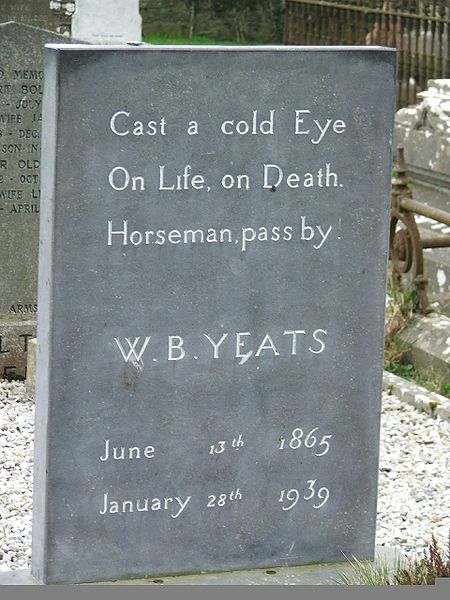
Somehow you have to toughen yourself up to something approaching a pebble … a pebble with a heart in it… Keep a calm clear and cold eye. A dry eye. But not a dry heart.
Or, as Flaubert said, we should be “equal to our destiny, that’s to say, impassive like it.” Even with a beating heart.
Keep your mind in hell, and despair not.
… English Masterpieces series of books
that came out in the ‘sixties.
She used them when was she was an
undergraduate at Northwestern;
and her sister-in-law, Joanna, used
them as an undergraduate at Boston
University. UD found
on the shelves in Shady Hill Square
(she’s just back from Cambridge for
Easter) this volume:

It includes a great poem by Archibald
MacLeish that she’d never seen before.
*******************************
Eleven
And summer mornings the mute child, rebellious,
Stupid, hating the words, the meanings, hating
The Think now, Think, the Oh but Think! would leave
On tiptoe the three chairs on the verandah
And crossing tree by tree the empty lawn
Push back the shed door and upon the sill
Stand pressing out the sunlight from his eyes
And enter and with outstretched fingers feel
The grindstone and behind it the bare wall
And turn and in the corner on the cool
Hard earth sit listening. And one by one,
Out of the dazzled shadow in the room
The shapes would gather, the brown plowshare, spades,
Mattocks, the polished helves of picks, a scythe
Hung from the rafters, shovels, slender tines
Glinting across the curve of sickles—shapes
Older than men were, the wise tools, the iron
Friendly with earth. And sit there quiet, breathing
The harsh dry smell of withered bulbs, the faint
Odor of dung, the silence. And outside
Beyond the half-shut door the blind leaves
And the corn moving. And at noon would come,
Up from the garden, his hard crooked hands
Gentle with earth, his knees still earth-stained, smelling
Of sun, of summer, the old gardener, like
A priest, like an interpreter, and bend
Over his baskets.
And they would not speak:
They would say nothing. And the child would sit there
Happy as though he had no name, as though
He had been no one: like a leaf, a stem,
Like a root growing—
*****************************
And is a great poetic word. And death shall have no dominion, etc., etc. You first meet it maybe in the Bible. And God spoke… and… and… See how every sentence in this poem starts with and? And why?
Why? Because the poet wants to convey the spontaneous, stream of consciousness, sudden memory trace feel of the mental and emotional moment the poem captures. It’s how we narrate, isn’t it? I remember I’d run from the porch and my books and my schoolwork and I’d run across the part of the yard that only had trees in it and I’d flee all that emptiness and abstraction for the bracing reality of the objects in the shed and I loved the way they slowly emerged from the darkness of the shed, and the way my summer-saturated eyes had to adjust to the darkness… And the way they rose from the dark world and took on a kind of super-existence… I remember that…
These were the wise tools, earth-friendly; not like my effortful cerebral exercises, my noisy verbal efforts to make the world mean something. They just were, sustaining silently on their surfaces the old truths of life. The gardener, adept in the soil and the soil’s tools, was the priest of the real world, interpreting its meanings with his gestures. I felt the real world inside myself as I sat there silently with him, felt my own plantlike stirrings and vibrancies. My sheer life – needing no name, and, like the leaves, happily blind to the convolutions of the human realm – began to twine upward into the real sunlight in that shed.
Robert Penn Warren was born there, in Guthrie, Kentucky, and the state has just put up signs on the highway north of the town telling people about it.
… “Only one person has won the Pulitzer Prize in both fiction and poetry,” the governor said of Warren [at the ceremony].
Warren was also deemed the first Poet Laureate of the United States.
“Robert Penn Warren reflected his pride of where he lived in his writing,” said Beshear. “Robert Penn Warren was proud of the place where he lived and the sign is to show him we’re proud of him.”…
Everyone knows his novel, All the King’s Men; his poetry, somewhat less known, is a series of strenuous spiritual nature lyrics. UD, though not immensely keen on Warren’s poetry, has always admired his lines’ unembarrassed intensity of emotion, their unreconstructed romanticism. Here’s a poem of his I just discovered. It has a surprising word in it.
*********************************
The Nature of a Mirror
The sky has murder in the eye, and I
Have murder in the heart, for I
Am only human.
We look at each other, the sky and I.
We understand each other, for
For the solstice of summer has sagged. I stand
And wait. Virtue is rewarded, that
Is the nightmare, and I must tell you
That soon now, even before
The change from Daylight Savings Time, the sun,
Beyond the western ridge of black-burnt pine stubs like
A snaggery of rotten shark teeth, sinks
Lower, larger, more blank, and redder than
A mother’s rage, as though
F.D.R. had never run for office even, or the first vagina
Had not had the texture of dream. Time
Is the mirror into which you stare.
******************************************
The sky has murder in the eye, and I
Have murder in the heart, for I
Am only human.
[I’ll die. I know that. The sky will survive me; the nature the sky’s part of will in fact kill me — I’m only human, only a fragile artifact of the natural world.]
We look at each other, the sky and I.
We understand each other, for
For the solstice of summer has sagged.
[The long sunlit days of summer are ending; the sky and the poet know that the poet’s days also shorten, darken.]
I stand
And wait. Virtue is rewarded, that
Is the nightmare,
[Like the blind Milton, the poet serves God even if he only stands and waits. But there’s a darker reading. The poet is full of rage when he considers how his light is spent; his impending death is night – a nightmare – and nothing else.]
and I must tell you
That soon now, even before
The change from Daylight Savings Time, the sun,
Beyond the western ridge of black-burnt pine stubs like
A snaggery of rotten shark teeth, sinks
Lower, larger, more blank, and redder than
A mother’s rage,
[Nightmare, from the Middle English, is a female demon disturbing the sleep; here, the nightmare takes shape as a burnt and rotten Mother Nature raging murderously after the poet. More blank. Nothingness gradually prevails.]
as though
F.D.R. had never run for office even, or the first vagina
Had not had the texture of dream.
[A bit of whimsy, a bit of wistfulness. The poet thinks, amid the big nothing, of the big somethings in his life: F.D.R.; his amazing initial encounter with the inside of a woman. The nothingness he feels in the face of the sky and the setting sun turns those things into nothings too. As though they never existed. What does Leopold Bloom say at his lowest? No one is anything.]
Time
Is the mirror into which you stare.
… is (who knew?) the house and garden and gravesite of Edna Saint Vincent Millay. It’s now open to the public, and UD, who will be in New York for most of August, will visit. And write about it here, on University Diaries.
As a kind of counterpoint to the terrible theme, lately, of university student suicides, there’s the following Millay poem.
******************************
God’s World
O world, I cannot hold thee close enough!
Thy winds, thy wide grey skies!
Thy mists that roll and rise!
Thy woods, this autumn day, that ache and sag
And all but cry with colour! That gaunt crag
To crush! To lift the lean of that black bluff!
World, World, I cannot get thee close enough!
Long have I known a glory in it all,
But never knew I this;
Here such a passion is
As stretcheth me apart. Lord, I do fear
Thou’st made the world too beautiful this year.
My soul is all but out of me, let fall
No burning leaf; prithee, let no bird call.
*******************************
Too much beauty. Must be the hills of upstate she’s looking at, height of autumn. The passion the too-candescent world makes her feel stretches her apart; she’s about to burst. Her soul is all but out of her.
She asks God to knock it off – no more orange leaves, no more birdsongs – or she’ll perish of bliss.
… soon to be installed in honor of Ted Hughes, UD looks at one of his poems.
September
We sit late, watching the dark slowly unfold:
No clock counts this.
When kisses are repeated and the arms hold
There is no telling where time is.
It is midsummer: the leaves hang big and still:
Behind the eye a star,
Under the silk of the wrist a sea, tell
Time is nowhere.
We stand; leaves have not timed the summer.
No clock now needs
Tell we have only what we remember:
Minutes uproaring with our heads
Like an unfortunate King’s and his Queen’s
When the senseless mob rules;
And quietly the trees casting their crowns
Into the pools.
*********************************************
Let’s look more closely.
September
[A funny month, neither here nor there. Summer still, but there are suggestions of fall. The poet locates his poem in this emotionally vulnerable season, its warmth and light and profuse life slowly being undone by something darker and colder. Transitional states make us, of course, think of time and its slow but unstoppable motion.]
We sit late, watching the dark slowly unfold:
No clock counts this.
[Lovers sit in a windowed room, embracing passionately and watching night come up. Engrossed in one another and in the soft gradual rhythms of the natural world, they don’t feel the passage of time. A perfect moment of infinite bliss. Yet the word “late,” meaning not merely late at night but late in the summer season, already signals trouble.]
When kisses are repeated and the arms hold
There is no telling where time is.
[A repetition, or a deepening, of the first two lines, with the very nice formulation “arms hold.” We do not merely hold one another in a steady embrace; our arms, like some mechanical object we’ve successfully repaired, “hold.” There’s a sense already of the tentative, jerry-built nature of this “hold.” Note also the linguistic care taken here, with variations of the soft s and the short i throughout – sit, this, kisses, is, is… Makes for a lulling feel which fits the lovers as they sit in a timeless trance.]
It is midsummer: the leaves hang big and still:
[See how he’s still doing it? It, is, mid, still…]
Behind the eye a star,
Under the silk of the wrist a sea, tell
[Infinity of light in the eye; oceanic endlessness in the body — This is love, which transcends time, which creates its own glorious world of permanence amid a world of impermanence.]
Time is nowhere.
We stand; leaves have not timed the summer.
[Now, in full night, the lovers get up to go to bed. Their passionate embraces are over. The poem is about to make a significant shift in mood and theme.]
No clock now needs
Tell we have only what we remember:
[From the idea of their needing no clock because their love triumphs over time, we move, with their standing up, to the idea of their needing no clock because they are so aware of their transience that they need no clock to remind them of it.]
Minutes uproaring with our heads
[Not only are they aware that they are slaves to time and not the eternal lovers they felt themselves to be before; they positively scream with the painful awareness of their own brevity. Each minute uproars within their heads as they break away from their bliss into the world of time.]
Like an unfortunate King’s and his Queen’s
When the senseless mob rules;
[Off with their heads! When the arms no longer hold, the head gets all mobbed up with the senseless, brutal world outside the beloved’s embrace.]
And quietly the trees casting their crowns
Into the pools.
[From an entire sea under the silk of the wrist we end in sad little pools into which the life of the lovers – their late summer leaves, their crowned heads, their crowning moment – is cast.]
A Valentine’s Day poem, short and sweet.
By Marvin Bell.
*************************
MARS BEING RED
Being red is the color of a white sun where it lingers
on an arm. Color of time lost in sparks, of space lost
inside dance. Red of walks by the railroad in the flush
of youth, while our steps released the squeaks
of shoots reaching for the light. Scarlet of sin, crimson
of fresh blood, ruby and garnet of the jewel bed,
early sunshine, vestiges of the late sun as it turns
green and disappears. Be calm. Do not give in
to the rabid red throat of age. In a red world, imprint
the valentine and blush of romance for the dark.
It has come. You will not be this quick-to-redden
forever. You will be green again, again and again.
****************************************
The poet considers various symbolic values of the color red. He begins with his title – Mars, the planet named for the god of war, is red; and warlike rage makes us red – we become crimson with rage, etc. So red isn’t merely the color of hearts and love; it’s the color of hate. The poem will play among the symbolic values of red, and it will urge one sort of redness upon us.
Being red is the color of a white sun where it lingers
on an arm. Color of time lost in sparks, of space lost
inside dance.
Red is our burning, our brightening; it is our flushed and feverish sensual dance, whose intensity makes us lose all sense of time.
Red of walks by the railroad in the flush
of youth, while our steps released the squeaks
of shoots reaching for the light.
Red is the shade of our most vivid memories of passionate youth, our very steps animating the natural world. (Notice the assonance here: youth/shoots; released/squeaks/reaching.)
Scarlet of sin, crimson
of fresh blood, ruby and garnet of the jewel bed,
early sunshine, vestiges of the late sun as it turns
green and disappears.
[Red is the color of sex, the jewel bed, one’s early years of erotic bliss. You barely register, from that ruby bed, the sun turning the world from amazing red to ordinary green as it sets.]
Be calm. Do not give in
to the rabid red throat of age.
[Here the lover turns to his beloved with his urgent imperative: Reject the martial red, the red of screaming rage and conflict. Be calm, not warlike. Have the passion of youth, not the aggression of age.]
In a red world, imprint
the valentine and blush of romance for the dark.
[In a dark red bloody world of wars, keep always in your mind and heart the light red blush of lovers’ bliss. This will lighten the darkness of warlike red.]
It has come. You will not be this quick-to-redden
forever. You will be green again, again and again
[At this very moment, Valentine, another one of our fires of passion has kindled. Our various forms of reddening (the poem leaves nothing to the imagination here) will not unfold so quickly forever. We’re going to get old and green, like the late sun. Read your Andrew Marvell! Calmly but determinedly, it’s time for us to blight the world of hate, and light the world of love.]