… fickle.
******************
Donald è mobile…
*******************
[English translation.]
Donald is fickle
Like a feather in the wind,
He changes his voice — and his mind.
Always sweet,
Pretty face,
In tears or in laughter — he is always lying.
… fickle.
******************
Donald è mobile…
*******************
[English translation.]
Donald is fickle
Like a feather in the wind,
He changes his voice — and his mind.
Always sweet,
Pretty face,
In tears or in laughter — he is always lying.
In case you haven’t yet heard.
With all this Christian love for a president who makes all ordinary sinners look like amateurs, it’s no wonder that Falwell — the president of Liberty University, which was founded by his dad, the legendary Southern Baptist pastor and televangelist — thought it was no big deal to unbutton his pants a little. … [But] Falwell was asked to take an indefinite leave of absence from his job at Liberty University. …
[T]he American right no longer feels any need to justify their will to power with over-the-top moralizing. Dominance has become its own justification.
So it’s not surprising that Falwell got a little lackadaisical about pretending to believe all that crap he’s been preaching about the virtues of sobriety and chastity. And more than a little dopey that the board of Liberty University is trying to act offended and going through the ritual of asking him to step aside.
*******************
Jerry died for their sins!


Recite The Credo with me.
UD proposes as his replacement King Juan Carlos.
Who knew Bret Stephens was capable of such great zingers?
I mean, okay, yes, you could argue there’s a whopper of a mixed metaphor lurking in there (shellacking/colonoscopy?). Who cares.
“No, [Jerry] Falwell isn’t facing anything like the academic equivalent of the death toll, economic ruin, and social upheaval that’s now occurring on [his buddy and role model] Trump’s watch, but beneath Liberty’s gleaming exterior, there are signs of trouble.
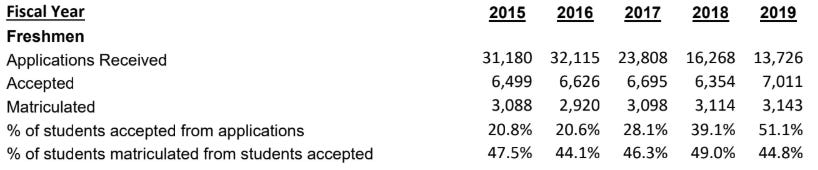
In fact, if you’re an academic, you’ll recognize the significance of numbers like these. Here is the shocking decline in Liberty’s freshman applications.”
… the memoir about UD’s Northwestern University professor, Erich Heller. I’ll have more to say today about the book and the memories it stirred, but the nonsense poems inspired me to try one of my own.
**********************
Every black pit bull speaks some Lithuanian.
If you try to engage them in Lett, or Ukrainian
They’ll look at you rudely, as if you’re insanian.

The custom’s quite different among Pomeranians:
With them it is Latvian during their trainian.
Polish? Or German? They claim it’s arcanian.

With lhasas it’s loopy because they’re Lacanian.
They’ll mirror your speech act whatever you’re sayingin –
A curious feature too hard to explainian.

Whatever the tongue of your canine campanian
Conversing with them will transcend entertainingian
And move straight to the realm of the supermundanian.
… that Mount Rushmore was America’s grandest outcropping of kitsch.
No, no, they’d say! I went there in the fourth grade with my family and we all thought it was awesome!
*************************
WE HAVE GOT TO MAKE THIS HAPPEN. If it takes a Go Fund Me page; if it takes bake sales all over this land, my lord, all over this land; if it takes sacrifice sacrifice and more sacrifice, this has got to happen.
*************************
Will it be as great as Carhenge? No. But it will be great.
Yes, yes. But the main thing is:
Look at the second photograph in this article. The picture of Sheldon Adelson and Trump. Doesn’t Adelson’s hair go with Trump’s face, and Trump’s hair go with Adelson’s face?
See how the Devil and the Demon Rum Deceive!
… of her rival Elizabeth Bennet; and this oldish word – brilliancy – came to UD‘s mind as she contemplated her undergraduate professor, Erich Heller. Not prone to thinking about the past (or the future – your blogueuse is somewhat in the buddhist way), UD was borne back into the past (truncated Great Gatsby reference there … hey it was your decision to read a literary blogger), via this memoir, written by Heller’s niece, and very much an evocation of the scholar of Rilke and Kafka who had a great impact on wee UD at Northwestern University in the 1970’s.
Heller’s brilliancy – by which I mean in part charisma – is obvious enough in this portrait of the young man as an impassioned Czech Jewish aesthete.

When I knew him, he looked like this.

Still the fully open, searching, lively eyes. He was always a beautiful polished dresser, which contrasted vividly with the thready hippies to whom he lectured so fiercely about the loss of meaning in the modern world. His own world had flamboyantly fallen apart with the Nazis, from whom he barely managed to escape, while his beloved brother spent years in concentration camps. (He also managed to survive.)
It was utterly, almost comically, clear to UD, as this man lectured, that he saw no way in which he could possibly begin to convey his and the world’s historical, spiritual, and existential wound to these frisky frisbee throwers.
Sixtyish, gay, hyper-snobby, dismissive of all NU students, all Americans (after cosmopolitan Prague, he spent years at Cambridge University, and now found himself prone on the prairie), and certainly all women (does the memoir ever make that one clear), Heller nonetheless hugely, hotly, attracted deine kleine Bloggerin.
How hotly? I had recurrent waking and sleeping fantasies about stumbling upon a solitary suffering Heller on the school’s lakeside beach and comforting him. Just – you know – happening to be the only person in the world who fully intuited his intellectual and emotional grief, his vell-done Weltschmerz (I’m antic about it now, but I assure you it was all passionately earnest then)…
Or imagine this – I was taking his all-Rilke-all-the-time course, and it was I don’t know the fifth Heller course I’d taken (Kafka, Thomas Mann, Nietzsche, Kleist?) and I was all fired-up as usual to re-enter this man’s hallowed hall … And yet from the first day of that particular course, I would sit, take out my paperback, and, at the opening “semi-operatic” tones of Heller’s voice (the memoir writer calls them this; I’d simply say operatic – he had a fine booming basso), fall completely to sleep. Ach, Doktor Freud, do tell. Vot vos dis Heller shpell?
*******************
I wrote excellent exams and papers, appeared every day in all his courses, sat there at full attention (I figured out how to stay awake in the Rilke course; I cured myself, Doktor!) – eventually the poor man had to notice me a little bit. I didn’t care whether he did, but eventually he did. I remember two post-class chats: In one I must have mentioned Nabokov and was startled by the casual violence of Heller’s dismissal of him (something about his obscenity?). The other is much more vivid to me because it was much more consequential. I told him that I was miserable in the Medill School of Journalism (I’d enrolled there rather than become an English major because I’d convinced myself I’d never get a job with a degree in English), absolutely miserable. And he looked at me with those avid open eyes and just as casually said: “If you are not happy there, vhy don’t you leave?”
And I swear to you, mes petites, minutes after this exchange I marched to the journalism building and began the process of dropping out of Medill.
More on Heller later today. Must weed. As UD likes to say: Weeding is fundamental.
Texas Tech must be seen to be believed. In this earlier post, UD surveyed the school’s long list of sadistic coaches – not to mention its bringing on board and giving all its money to luminaries like Alberto Gonzales and Tommy Tuberville – and concluded that something way kinky was going on there. It’s as if the place seeks after twisted people to hurt its students and its reputation.
Incredibly, this idea – that TTU actually recruits the sadistic as a kind of school policy – seems not so wild. For with all that sadomasochism behind it, TTU went and hired another one … or another two…
Twelve of the 21 women who played for Texas Tech since [Marlene] Stollings took over the program in 2018 have left, [citing player abuse]…. [Also, players accused] former strength and conditioning coach Ralph Petrella of berating and sexually harassing them … [Stollings has now also been fired.]
Luckily, assistant coach Nikita Lowry Dawkins is still there!
[One player reports she was] told by assistant coach Nikita Lowry Dawkins to snap a rubber band on her wrist when she had a negative thought.
*******************
Plus you don’t have to be selected for a varsity team to get the shit beat out of you in Lubbock. Lubbock is one of America’s most violent cities. Just walk outside.
Dr. Bernard Carroll, known as the "conscience of psychiatry," contributed to various blogs, including Margaret Soltan's University Diaries, for which he sometimes wrote limericks under the name Adam.
New York Times
George Washington University English professor Margaret Soltan writes a blog called University Diaries, in which she decries the Twilight Zone-ish state our holy land’s institutes of higher ed find themselves in these days.
The Electron Pencil
It’s [UD's] intellectual honesty that makes her blog required reading.
Professor Mondo
There's always something delightful and thought intriguing to be found at Margaret Soltan's no-holds-barred, firebrand tinged blog about university life.
AcademicPub
You can get your RDA of academic liars, cheats, and greedy frauds at University Diaries. All disciplines, plus athletics.
truffula, commenting at Historiann
Margaret Soltan at University Diaries blogs superbly and tirelessly about [university sports] corruption.
Dagblog
University Diaries. Hosted by Margaret Soltan, professor of English at George Washington University. Boy is she pissed — mostly about athletics and funding, the usual scandals — but also about distance learning and diploma mills. She likes poems too. And she sings.
Dissent: The Blog
[UD belittles] Mrs. Palin's degree in communications from the University of Idaho...
The Wall Street Journal
Professor Margaret Soltan, blogging at University Diaries... provide[s] an important voice that challenges the status quo.
Lee Skallerup Bessette, Inside Higher Education
[University Diaries offers] the kind of attention to detail in the use of language that makes reading worthwhile.
Sean Dorrance Kelly, Harvard University
Margaret Soltan's ire is a national treasure.
Roland Greene, Stanford University
The irrepressibly to-the-point Margaret Soltan...
Carlat Psychiatry Blog
Margaret Soltan, whose blog lords it over the rest of ours like a benevolent tyrant...
Perplexed with Narrow Passages
Margaret Soltan is no fan of college sports and her diatribes on the subject can be condescending and annoying. But she makes a good point here...
Outside the Beltway
From Margaret Soltan's excellent coverage of the Bernard Madoff scandal comes this tip...
Money Law
University Diaries offers a long-running, focused, and extremely effective critique of the university as we know it.
Anthony Grafton, American Historical Association
The inimitable Margaret Soltan is, as usual, worth reading. ...
Medical Humanities Blog
I awake this morning to find that the excellent Margaret Soltan has linked here and thereby singlehandedly given [this blog] its heaviest traffic...
Ducks and Drakes
As Margaret Soltan, one of the best academic bloggers, points out, pressure is mounting ...
The Bitch Girls
Many of us bloggers worry that we don’t post enough to keep people’s interest: Margaret Soltan posts every day, and I more or less thought she was the gold standard.
Tenured Radical
University Diaries by Margaret Soltan is one of the best windows onto US university life that I know.
Mary Beard, A Don's Life
[University Diaries offers] a broad sense of what's going on in education today, framed by a passionate and knowledgeable reporter.
More magazine, Canada
If deity were an elected office, I would quit my job to get her on the ballot.
Notes of a Neophyte