
Cy Twombly loved Rilke’s poetry and
often put it in his paintings, as in
Rose V, which quotes The Roses XXVI:
Infinitely at ease
despite so many risks,
with no variation
of her usual routine,
the blooming rose is the omen
of her immeasurable endurance.
(Click on the Twombly to read
these words on the canvas.)
***************************
(But for tonight we’ll seek
Our own level in Rilke.
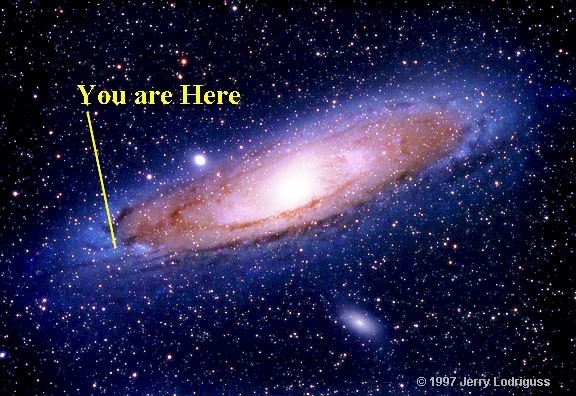
We’ll locate ourselves, not the rose,
Our human placement in the cosmos.
Do you remember those comic post
Cards: YOU ARE HERE? It’s of those
Sorts of things UD speaks
Through Rilkean lyrics.)
***************************
(translated by Stephen Mitchell)
The sky puts on the darkening blue coat
held for it by a row of ancient trees;
you watch: and the lands grow distant in your sight,
one journeying to heaven, one that falls;
and leave you, not at home in either one,
not quite so still and dark as the darkened houses,
not calling to eternity with the passion
of what becomes a star each night, and rises;
and leave you (inexpressibly to unravel)
your life, with its immensity and fear,
so that, now bounded, now immeasurable,
it is alternately stone in you and star.
*******************************
This translation opts for inexact rhyme to convey our inexactitude, our unpinpointable, virtually inexpressible, form of being. We watch the night divide the world into sky and land and we know we are neither earthen (“the darkened houses”) nor metaphysical (“a star”), but something else. When night sweeps away non-human realms it strands us with drama and clarity in the quandary of our lives, which is to say in the imperative to live them, to assume the burden of their twin conflictual mysteries, their immensity (the conviction they give us of starlike passionate expansiveness) and their fear (the knowledge of fragility – as with the rose: “so many risks” – and of death). The night world leaves us humanly alone to unravel the knot of existence, and the best we can do is accept each opposing entwining strand – stone, star, stone, star – as it arises.
Another translation goes for exact rhyme (a canny job, but rather far from the original text), in which we “cannot be unraveled” at all; yet a third has us left “wordlessly to untangle” our lives.
Whether we can get anywhere with ourselves is, I guess, an open question; but there’s no question that grappling honestly with fear and vulnerability is one of the best things we do. I love Philip Larkin’s night poem, which shares the stars and the trees and the twine with Rilke, but peers more intimately at us – at our most vulnerable:
At one the wind rose,
And with it the noise
Of the black poplars.
Long since had the living
By a thin twine
Been led into their dreams
Where lanterns shine
Under a still veil
Of falling streams;
Long since had the dead
Become untroubled
In the light soil.
There were no mouths
To drink of the wind,
Nor any eyes
To sharpen on the stars’
Wide heaven-holding,
Only the sound
Long sibilant-muscled trees
Were lifting up, the black poplars.
And in their blazing solitude
The stars sang in their sockets through
the night:
`Blow bright, blow bright
The coal of this unquickened world.’
****************************
So for me the heart of this is here:
Long since had the living
By a thin twine
Been led into their dreams
Where lanterns shine
Under a still veil
Of falling streams…
There is our fragility, so beautifully expressed, as we first sink into nightly rest and then lie quiet as our minds open on to our dreams. Led into nightly dreamlife by a “thin twine” separating conscious from unconscious, we watch again and again our deepest most private dramas on a stage whose curtains are thin watery veils, and whose lights are little swaying lanterns… How weakly cobbled together it all is! How thin the twines and veils and streams.
January 2nd, 2015 at 7:23PM
Have read little Rilke. Let me recommend seeing the tons of Twombly paintings in the Brandhorst in Munich:
http://www.museum-brandhorst.de/en/collection-brandhorst/cy-twombly.html
Especially the Battle of Lepanto series, which reminded me, in an oblique way, of Monet’s big lily panels.