… at Chapel Hill.
It’s true that investigations require withholding facts and that federal privacy laws limit what can be said about student records. It’s also true that the university system president and the UNC-CH chancellor can’t respond to every allegation. Folt and Ross are following the advice of university lawyers. But when the university is hit by allegations as strong and high-profile as those coming from McCants, leaders can’t take refuge behind lawyers and investigators.
This is when leaders step forward, address the public and answer questions. That imperative is particularly strong for leaders of a public university who must uphold the public trust with more than constrained silence and appeals for patience.
It makes a lot of noise when accusations of sexual assault come out of the Ivy League, especially when the accused are football players. The Brown University story is rapidly getting national coverage.
On the other hand, it took newspapers ages to notice what was going on at the University of Montana, where things have gotten so bad that “UM officials concede the controversy [over reported incidents and the university’s response to them] contributed to the school’s enrollment drop.” That drop in enrollment – a very big drop – has continued since the story began to break in 2012. It doesn’t help that UM is featured in the opening paragraphs of a Time article about campus rape.
… on the question of whether he’s a career plagiarist; and you would too, especially if you’re carrying around not only your own divinity degree, but honorary doctorates from two seminaries.
Still, this New Republic piece does seem to have the goods on Chris Hedges, prolific political writer…
The case, if proved, reminds UD of Johan Hari, another self-styled George Orwell (Hari even won the Orwell Prize, though he had to give it back) whose plagiarism bore the same reckless mark as Hedge’s apparently totally over the top use of other people’s ideas and prose.
Lots of other wonder boys come to mind here too: Jonah Lehrer. Phil Jacob. Stephen Glass. Jayson Blair. So many others.
Life of the mind, United States of America, 2014.
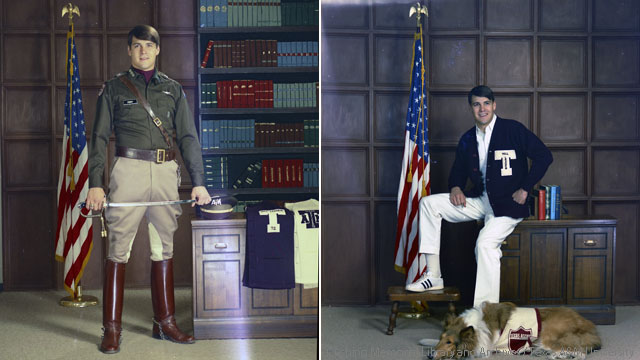
… was a cheertator at Texas A&M.
Although Perry gave into his desire to adopt this strikingly non-mainstream personal choice, he’s not very generous when it comes to the inclinations of others:
“I may have the genetic coding that I’m inclined to be an alcoholic, but I have the desire not to do that,” Perry said in remarks broadcast on the local CBS affiliate. “And I look at the homosexual issue in the same way.”
Charles Wright, a UD fave (see her analysis of Black Zodiac here), is the new US poet laureate.
If you read through some of the poems on this page, you’ll see one strongly recurrent theme, and one strongly characteristic technique. Like Don DeLillo – he’s about DeLillo’s age, looks quite a lot like him, and presents to the world a very similar laconic diffident serious and almost shy demeanor – Wright is a lapsed but still gasping (grasping?) metaphysician. Both were raised Christian; both have long since ceased to believe. But both retain, in a visionary way, “the glowing shards of things which have continued to dazzle at me,” as Wright puts it. DeLillo notes the retention within his atheist self of eschatological seriousness:
[One of my characters] needs to know that people out there believe in all the old verities, the old gods. These things keep the planet warm. But she herself is not a believer. I think there is a sense of last things in my work that probably comes from a Catholic childhood. For a Catholic, nothing is too important to discuss or think about, because he’s raised with the idea that he will die any minute now and that if he doesn’t live his life in a certain way this death is simply an introduction to an eternity of pain. This removes a hesitation that a writer might otherwise feel when he’s approaching important subjects, eternal subjects. I think for a Catholic these things are part of ordinary life.
Both writers see a planet warmed by a glow from somewhere, warmed by a transmission from a force that feels like an ultimacy. They’re always sticking their speakers or characters in metaphysically charged settings – the desert in novels like The Names and Point Omega (the latter novel features a main character who “sit[s] and reflect[s] on grand subjects such as time, extinction and the attainment of what Teilhard de Chardin called the Omega Point: a zen-like state of relinquished consciousness.”), and, in Wright, the foothills of the Appalachians at dusk, with the natural world pouring down its dazzle and the poet conscious of the pathetic nothingness, in this rich and self-sufficient context, of the human. Here’s a short, echt-Wright poem, Vesper Journal. Note the teasingly prayerful title, plus the contrast between non-human living things, which lyrically accept the “tiny,” “half-grain” nature of the earth, and restless miserable metaphysically-grasping humans who can only, poem after poem after poem, lament that “language, always, is just language.”
Wright’s technique, a long free-verse line that weaves about from slangy prosaic chat to intensely Romantic nature description to baldly metaphysical reflection, captures modern consciousness as it registers both its capacity to feel awe and its inability to make awe meaningful. Wright is unlike the steadily Episcopalian Richard Wilbur, who tells an interviewer
I feel that the universe is full of glorious energy, that the energy tends to take pattern and shape, and that the ultimate character of things is comely and good. I am perfectly aware that I say this in the teeth of all sorts of contrary evidence, and that I must be basing it partly on temperament and partly on faith, but that is my attitude. My feeling is that when you discover order and goodness in the world, it is not something you are imposing — it is something that is likely really to be there, whatever crumminess and evil and disorder there may also be. I don’t take disorder or meaninglessness to be the basic character of things. I don’t know where I get my information, but that is how I feel.
For Wright, we can’t even impose it anymore; we can only mull over earlier poetic (and theological) efforts to impose it. All of Black Zodiac (note the title – the blacked-out heavens) is a backward glance at the poet’s precursor cosmologists – Dante, Milton – and an insistence that these “masters” leave the poet alone in his “dwarf orchard” to work out his shrunken relationship to the cosmos. Language isn’t a medium anymore, a way through to hidden cosmic truths; it’s “an element, like air or water.” (Wright takes this last phrase from Wallace Stevens.) The human voice, our words, our poetry – these aren’t vehicles toward something metaphysical. They are simply the material, life-sustaining environment in which we move every moment of our lives. We are condemned to live out our lives trying to get the better of words (that latter phrase is from T.S. Eliot’s East Coker), knowing that we never will, but knowing also that they are all we have.
Allow UD to speak for university professors in saying how thrilled we are — after Eric Cantor’s loss to a professor, which sets up a congressional contest in Virginia between a professor and another professor — that you like us!
♥♥♥♥♥♥♥♥♥
Dig: “[T]he House majority leader may have lost his seat because he made a mistake in presuming that Americans hate college professors more than professional politicians.”
!!!!!!!!!
Brat’s syllabus for “The Ends of Economic Justice” lists God as the author of the Bible. (I’ll wager God’s not receiving royalties.) Sales aren’t everything though. Sadly, like Plato and Aristotle, the omnipotent deity is merely suggested reading; the required textbook is by none other than Brat himself. Well, it is an economics class.
La Kid is currently living
in Galway, in one of the apartments

above this restaurant. Milano is
“situated just a stone’s throw from
bustling Shop Street. Considered to
be the city’s most stylish dining room,
it is a spacious restaurant, often
described by visitors as an oasis in
the midst of the hustle and bustle of
busy city life.” La Kid will not starve.
… court time is for everybody!
At Chapel Hill, whether you’re a celebrated, veteran professor, or a just-minted freshman, whether you’re in court for criminal fraud or felony larceny, you’re part of the special family of cheaters, liars, and thieves that is the public face of UNC.
Roger Noll, a retired Stanford economist, touches on one of the most notorious aspects of university sports during his testimony at the O’Bannon trial. Noll calls it inefficient substitution.
UD calls it Hail Saban Prince of Darkness.
Desolation is too abstract. UD realizes this. UD realizes that outside of this blog you are never going to encounter a list of America’s most and least desolate universities. You will find Best Dorms, Worst Faculty – that sort of thing. But desolation… an atmosphere of sorrow and lostness… an air of wreckage and ruination…
After covering CMU for years (here are her CMU posts), and taking into account the latest news story out of that campus, UD has concluded that nowhere else among this country’s many colleges and universities are you going to find the intensity of drunken depressed spiritlessness that you will at CMU.
I mean, what part of this account of a CMU environmental studies professor who shot at two vacuum cleaner salesmen is not desolate and desolating? It’s pretty sad to contemplate being traveling vacuum salesmen making cold calls. It’s also sad to contemplate their ringing the bell at a home inhabited by an inebriated (the professor’s five charges include possession of a firearm while under the influence) professor waiting to empty his shotgun into whoever appears on his property.
This story is Desolate Meets Desolate, and the outcome of their meeting displays the seriocomic Surreal America theme of every Thomas Pynchon novel you’ve ever read. Booze, gunplay, farce, desperate escapes in trucks crammed with vacuum cleaners… This is CMU.
The coach of a Chicago public high school whose basketball team won and then forfeited the city championship asks, reasonably enough, why his particular school should have to take the fall for the failure of the entire Chicago public school system to keep player eligibility records.
[T]he school district is missing most of the paperwork required to show team and player eligibility, documents obtained through a Freedom of Information Act request show. The district ignored initial requests for the data and later released it.
UD‘s favorite part of this story is the location chosen for the championship game: Chicago State University (scroll down).
Talk about a cosmic convergence!
[Duet, O’Bannon/Emmert.]
O’Bannon:
“Was I really happy there
With the basketball I played?
Pretending to attend UCLA.
Searching but not finding
Understanding anywhere
I’m lost in a masquerade.”
*****************
Emmert:
“I’m afraid to say we’re just too far away.
You don’t seem to understand the NCAA.
We tried to talk it over but my Porsche got in the way.
We’re lost inside this legal game we play.
Thoughts of losing $1.67 million
Appear each time I see your eyes.
No matter how hard I try
To understand your reasons why
You know I can’t let
You take my private jet.”
******************
O’Bannon, Emmert:
Yeah, we’re lost in a masquerade…
… a masquerade… (fade out)
(Earlier posts here and here.)
The natural fatness of these lime leaves!—-
Pollarded green balls, the trees march to church.
The voice of the priest, in thin air,
Meets the corpse at the gate,
Addressing it, while the hills roll the notes of the dead bell;
A glitter of wheat and crude earth.
What is the name of that color?—-
Old blood of caked walls the sun heals,
Old blood of limb stumps, burnt hearts.
The widow with her black pocketbook and three daughters,
Necessary among the flowers,
Enfolds her lace like fine linen,
Not to be spread again.
While a sky, wormy with put-by smiles,
Passes cloud after cloud.
******************
Earlier, in her poem Berck Plage, Sylvia Plath described the ocean creep[ing] away, many-snaked, with a long hiss of distress. Now she looks up, and describes the sky, wormy with put-by smiles.
This is a world frozen in the act of becoming posthumous; on the beach we hear and see the recession of things – the sky holds faintly curved imprints of vanished smiles (the smiles of Cheshire Cat nurses who pretend to keep you alive and then vanish with a knowing smirk when you die), while the sea, oceanically insidious, is not worms but snakes, a hideous Medusa whose receding hiss hiss hiss whispers the sickening recurrence of life, suffering, and death.
The idea of futile recurrence is significantly softened in “Dover Beach,” where, standing on the coast across from Berck Plage,
you hear the grating roar
Of pebbles which the waves draw back, and fling,
At their return, up the high strand,
Begin, and cease, and then again begin,
With tremulous cadence slow, and bring
The eternal note of sadness in.
Sophocles long ago
Heard it on the Ægean, and it brought
Into his mind the turbid ebb and flow
Of human misery…
Here the sound is still tonal. It even has cadence. It’s about lyric sadness, not cold-blooded anguish. And we still own it – it hasn’t hardened into mythology yet. We share it with the ages, with Sophocles.
Matthew Arnold’s speaker looks behind him, into his hotel room, at his beloved; he turns and looks outside his window at a “fair” and “sweet” scene. Plath’s poem features not lovers but obscene exhibitionists stared at by an
onlooker, trembling,
Drawn like a long material
Through a still virulence…
The observer in Plath’s poem sees no beauty; she doesn’t even see any motion. Or if it’s motion, it’s worms moving on the bodies of the dead. It’s germs doing their slow work of undoing us – a still virulence – and all we can do is gape at the obscene semi-hidden desiccating procedure. That Cheshire cat is the grin of a skull, and the lovers, swallowed up by the sea, are becoming
white sea-crockery,
What cupped sighs, what salt in the throat….
94% sports subsidy at a school with just about the lowest graduation rate in the country. Only in America.
And, if you can stand it, more posts on Chicago State University (scroll down).
UD REVIEWED
Dr. Bernard Carroll, known as the "conscience of psychiatry," contributed to various blogs, including Margaret Soltan's University Diaries, for which he sometimes wrote limericks under the name Adam.
New York Times
George Washington University English professor Margaret Soltan writes a blog called University Diaries, in which she decries the Twilight Zone-ish state our holy land’s institutes of higher ed find themselves in these days.
The Electron Pencil
It’s [UD's] intellectual honesty that makes her blog required reading.
Professor Mondo
There's always something delightful and thought intriguing to be found at Margaret Soltan's no-holds-barred, firebrand tinged blog about university life.
AcademicPub
You can get your RDA of academic liars, cheats, and greedy frauds at University Diaries. All disciplines, plus athletics.
truffula, commenting at Historiann
Margaret Soltan at University Diaries blogs superbly and tirelessly about [university sports] corruption.
Dagblog
University Diaries. Hosted by Margaret Soltan, professor of English at George Washington University. Boy is she pissed — mostly about athletics and funding, the usual scandals — but also about distance learning and diploma mills. She likes poems too. And she sings.
Dissent: The Blog
[UD belittles] Mrs. Palin's degree in communications from the University of Idaho...
The Wall Street Journal
Professor Margaret Soltan, blogging at University Diaries... provide[s] an important voice that challenges the status quo.
Lee Skallerup Bessette, Inside Higher Education
[University Diaries offers] the kind of attention to detail in the use of language that makes reading worthwhile.
Sean Dorrance Kelly, Harvard University
Margaret Soltan's ire is a national treasure.
Roland Greene, Stanford University
The irrepressibly to-the-point Margaret Soltan...
Carlat Psychiatry Blog
Margaret Soltan, whose blog lords it over the rest of ours like a benevolent tyrant...
Perplexed with Narrow Passages
Margaret Soltan is no fan of college sports and her diatribes on the subject can be condescending and annoying. But she makes a good point here...
Outside the Beltway
From Margaret Soltan's excellent coverage of the Bernard Madoff scandal comes this tip...
Money Law
University Diaries offers a long-running, focused, and extremely effective critique of the university as we know it.
Anthony Grafton, American Historical Association
The inimitable Margaret Soltan is, as usual, worth reading. ...
Medical Humanities Blog
I awake this morning to find that the excellent Margaret Soltan has linked here and thereby singlehandedly given [this blog] its heaviest traffic...
Ducks and Drakes
As Margaret Soltan, one of the best academic bloggers, points out, pressure is mounting ...
The Bitch Girls
Many of us bloggers worry that we don’t post enough to keep people’s interest: Margaret Soltan posts every day, and I more or less thought she was the gold standard.
Tenured Radical
University Diaries by Margaret Soltan is one of the best windows onto US university life that I know.
Mary Beard, A Don's Life
[University Diaries offers] a broad sense of what's going on in education today, framed by a passionate and knowledgeable reporter.
More magazine, Canada
If deity were an elected office, I would quit my job to get her on the ballot.
Notes of a Neophyte
Archives
Categories